
Chesapeake warrants search helps users check active warrants issued within Chesapeake, Virginia, through official court record systems linked with local courts. It shows whether a warrant exists for a person, including cases tied to criminal charges or missed court appearances in the Chesapeake jurisdiction. This information comes from structured warrant database systems used by courts and law enforcement agencies. It helps display the current legal status based on official filings and court actions.
This warrant lookup Virginia system collects data from court databases and law enforcement alerts connected with public safety records. It includes active warrants, Chesapeake, and bench warrants issued when someone fails to appear in court or violates court orders. The system reflects updates from court filings, police records, and judicial entries across Virginia. Users can review case-linked warrant details that may change based on new court activity or enforcement status.
What Is a Warrant in Chesapeake, Virginia?
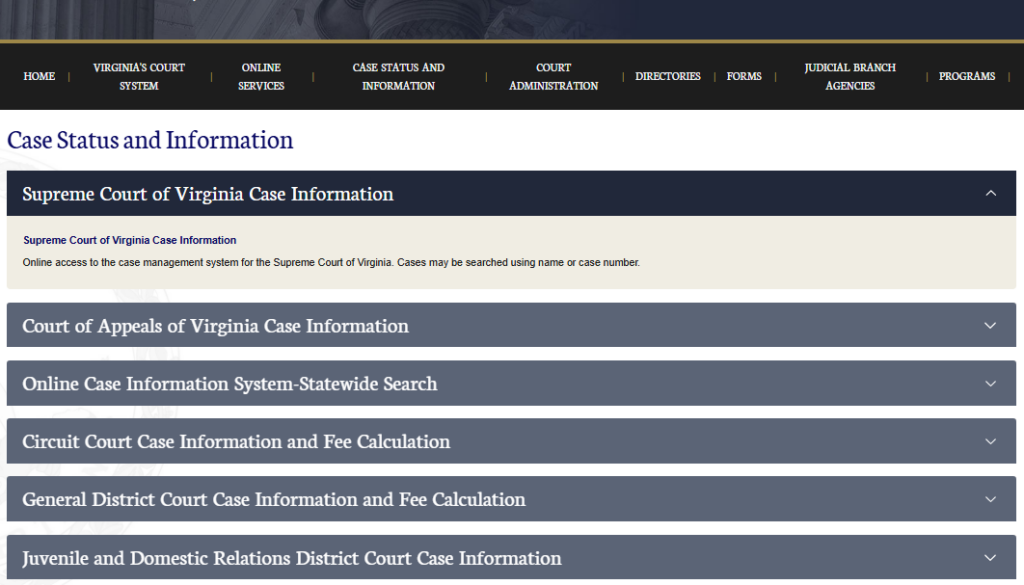
A warrant in Chesapeake, Virginia, is a formal court https://www.courts.state.va.us/caseinfo/home order issued by a judge or magistrate that allows law enforcement to take a specific legal action. It is issued after evidence shows probable cause that a person may be linked to a crime. It works as legal authorization within the Virginia court system for police action under criminal procedure rules.
Legal Definition and Judicial Authority
A warrant represents written permission issued under judicial authority. It is reviewed and signed by a judge or magistrate after evaluating facts presented by law enforcement officers. This step confirms that the action follows lawful standards. The process connects directly with criminal procedure, where police present statements, reports, or evidence before any order is granted. Once approved, it becomes a binding court instruction. Probable cause plays a central role here. It refers to factual details that suggest criminal involvement based on reasonable judgment, not personal opinion or guesswork.
Warrant types in Chesapeake include:
- Arrest warrants: authorize the detention of a person suspected of a crime
- Search warrants: permit examination of property for evidence
- Bench warrants: issued when court instructions are ignored, such as missed hearings
These orders form part of law enforcement action carried out under court supervision.
Why Arrest Warrants Are Issued in Chesapeake
Arrest warrants are issued when a judge or magistrate finds sufficient probable cause linking a person to a criminal act. They support controlled enforcement within the legal system. Law enforcement requests a warrant when direct arrest cannot proceed without court approval. This step protects legal rights while allowing structured action.
Reasons for issuance include:
| Reason | Explanation |
|---|---|
| Suspected criminal activity | Evidence suggests involvement in a reported offense |
| Failure to appear in court | Missed scheduled hearing or violation of summons |
| Violation of court orders | Ignoring restrictions set by the court |
Each case follows court orders that direct police actions under Virginia law. The warrant acts as a formal link between suspicion, evidence review, and lawful enforcement.
How Chesapeake Warrants Search Works
A Chesapeake warrants search shows whether a person has active warrants issued by local courts or law enforcement. A warrant lookup in the Virginia system pulls data from court filings and sheriff department records tied to criminal cases. This process links court decisions with law enforcement records, which helps confirm active warrants Chesapeake residents may be subject to.
Virginia General District Court Records Search Process
The Virginia General District Court Online Case Information System provides public access to district court records throughout Virginia. Users can locate case information by selecting a court location, choosing a case category, and using one of the available search methods.
- Visit the official Virginia General District Court Online Case Information System:
https://eapps.courts.state.va.us/gdcourts/landing.do#
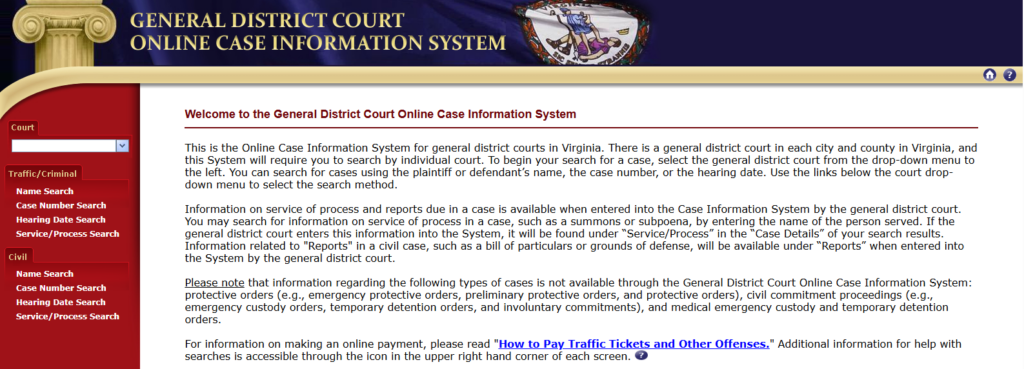
- Select the appropriate court from the “Court” dropdown menu.
- Choose a case category, including:
- Traffic/Criminal
- Civil
- Select a search option, such as:
- Name Search
- Case Number Search
- Hearing Date Search
- Service/Process Search
- Enter the required case details and submit the search.
- Review available case information, including case status, charges, and hearing details.
Sheriff’s Office Role in Active Warrants Chesapeake
The sheriff’s department plays a central role in managing active warrants in Chesapeake cases. It acts as the main enforcement body that executes court-issued orders.
Once a warrant enters the system, deputies handle:
- Verification of warrant details during stops or investigations
- Entry of warrant data into enforcement databases
- Coordination with courts on status updates
- Execution of arrests linked to criminal warrants
The sheriff’s office also maintains internal law enforcement records used during field operations. These records often update faster than public-facing tools.
Database vs Manual Warrant Lookup in Virginia Methods
Warrant lookup in Virginia methods fall into two main categories: digital database searches and manual courthouse checks. Each method serves a different purpose and produces different levels of detail.
Database search systems
These systems pull records from multiple agencies and show structured results.
- Faster results through digital warrant database systems
- Limited public details for sensitive cases
- Updates linked to court and sheriff feeds
- Useful for general criminal search tools
Manual courthouse checks
These involve direct review of case files at court offices.
- Staff review physical or internal digital case files
- More complete case context available
- May include filing history tied to warrants
- Slower process compared to databases
Types of Warrants in Virginia
Virginia warrants fall into three main types: arrest warrants, bench warrants, and outstanding warrants in Chesapeake. Each type comes from a different court action or police decision tied to a specific case status. These warrants affect how law enforcement responds and how a person may be located or detained under the criminal justice system.
Arrest Warrants
Arrest warrants are issued after a criminal investigation shows probable cause. A judge signs the warrant once law enforcement presents facts linked to a suspected offense. Police officers then execute the arrest warrant through direct detention or a scheduled arrest. The warrant lists the suspect’s name, alleged charge, and supporting details from the case file.
Points about arrest warrants:
- Issued after evidence review by a judge
- Linked to active criminal investigations
- Served by police through detention or custody placement
- May involve coordination between agencies
Police enforcement teams may search known addresses, workplaces, or public locations. In some cases, arrest warrants remain active until the person is taken into custody or the court cancels the order.
Bench Warrants
Bench warrants are issued when a person fails to appear in court. Judges issue these warrants directly from the bench during a hearing or scheduled court date. Failure-to-appear cases often trigger the immediate issuance of a warrant. The court records show the missed appearance, then the warrant becomes active for enforcement.
Reasons for bench warrants:
- Missed court hearings
- Ignored summons or notices
- Violations of probation terms
- Failure to pay required fines or fees
Once issued, police may detain the person during routine stops or targeted enforcement actions. These warrants remain active until the court recalls them or the case is resolved.
Outstanding Warrants
Outstanding warrants in Chesapeake refer to active warrants that remain unresolved in the system. These include both arrest warrants and bench warrants that have not been cleared. Outstanding warrants stay in police and court databases for long-term enforcement tracking. Law enforcement agencies may act on them at any time during routine checks or targeted operations.
Features of outstanding warrants:
- Active legal status with no resolution
- Stored in state and local databases
- Subject to enforcement across jurisdictions
- May remain active for long periods
These warrants often appear in background checks used by law enforcement and court officials. The status remains active until the court closes the case, the person appears in court, or custody occurs.
How to Check Active Warrants in Chesapeake, VA
A person can check active warrants in Chesapeake records through online court systems, local law enforcement offices, or courthouse inquiries. Public databases, sheriff’s office contacts, and police records search tools often provide details about warrant status, wanted persons, and related criminal case activity. Many residents use public court systems to review warrant-related information before handling legal matters. A quick search can help confirm whether a bench warrant, arrest warrant, or law enforcement alert exists in Chesapeake, Virginia.
Online Active Warrant Search Options
Several online resources help people perform a fugitive search or review warrant-related court activity. Virginia court databases often list criminal case records connected to active warrants, missed court appearances, or pending charges.
Online lookup methods include:
- Virginia court record systems
- Local police records search portals
- Public criminal records database tools
- Wanted persons search pages
- Law enforcement alerts published by agencies
Most online searches require basic details, such as:
| Search Information | Purpose |
|---|---|
| Full name | Matches court or police records |
| Date of birth | Helps narrow results |
| Case number | Finds specific court activity |
| Location | Filters Chesapeake records |
Some records appear immediately online. Others may stay limited if the case involves active investigations, juvenile matters, or sealed court files. A public safety system may update warrant records daily, though posting times vary between agencies. A search result does not always confirm the current legal status. Many users contact the courthouse or sheriff’s office for direct confirmation.
Courthouse Inquiry Process for Warrant Records
The Chesapeake courthouse remains one of the most direct places to check warrant information. Court clerks can often confirm whether a criminal case includes an outstanding warrant or scheduled hearing.
Visitors usually complete these steps:
- Visit the courthouse records counter
- Provide a full legal name
- Request criminal case information
- Review available public court documents
Some courthouse staff may explain filing dates, hearing schedules, or case types connected to the warrant. Staff members cannot provide legal advice, though they can explain public record procedures.
People searching for active warrants in Chesapeake records often review:
- Bench warrants
- Failure-to-appear warrants
- Probation violation warrants
- Arrest warrants tied to criminal investigations
Many courts keep electronic systems inside the building for public searches. These terminals may contain more detailed information than online databases.
Sheriff’s Office and Police Contact Methods
The Chesapeake Sheriff’s Office and local police departments may provide warrant information through phone inquiries or in-person requests. Some agencies maintain a wanted persons search page with updated law enforcement alerts and fugitive details.
Before calling, people often prepare:
- Full legal name
- Date of birth
- Possible case number
- Approximate warrant date
Law enforcement agencies may limit details during open investigations. Staff may request in-person verification before releasing certain records.
Are Warrants Public Record in Virginia?
Yes, many warrant records in Virginia are part of the public records system. Still, some details stay restricted during active investigations or court proceedings. Virginia law supports legal transparency through court documentation and government records. Local courts, law enforcement agencies, and public databases may release certain warrant details to the public. Yet, state privacy rules limit some information to protect ongoing cases and personal safety.
Public Records, Virginia Laws, and Warrant Information
Virginia follows the Virginia Freedom of Information Act (FOIA). This law allows the public to request many types of government records from state and local agencies.
Under FOIA, a person may request records connected to:
- Court cases
- Arrest records
- Criminal charges
- Public court documentation
- Some active or closed warrant files
A Chesapeake warrant database may include:
| Record Type | Publicly Available |
|---|---|
| Arrest warrants after execution | Yes |
| Bench warrants from court cases | Often yes |
| Outstanding warrants | Sometimes limited |
| Juvenile warrant records | No |
| Sealed court records | No |
| Active investigation details | Restricted |
Courts and police departments decide what information can appear in a public access system. In many cases, agencies remove sensitive details before releasing records.
What Information Is Restricted?
Some warrant information stays private under Virginia law. Police agencies may withhold records tied to active investigations, confidential witnesses, or public safety concerns.
Restricted records often include:
- Juvenile court files
- Sealed or expunged records
- Ongoing criminal investigation materials
- Victim identities in sensitive cases
- Certain law enforcement notes
This balance supports both legal transparency and public safety. A court may block public viewing of records if release could affect a criminal case.
How the Public Access System Works
Virginia courts use online court systems and clerk offices to provide limited public record searches. Users may search by:
- Name
- Case number
- Court location
- Hearing date
Some Chesapeake warrant records appear after law enforcement serves the warrant. In other cases, a record may stay hidden until the court process moves forward.
What Happens After a Warrant Is Issued?
After a judge signs an arrest warrant, law enforcement officers can begin searching for the named person. The case then moves into the criminal enforcement process, which may include arrest, detention, jail intake, and a required court appearance.
Police Execution Process After Arrest Warrants Are Filed
Police officers receive law enforcement alerts after the court issues a warrant, and the information often enters state and national warrant databases. Officers may arrest the person during a traffic stop, at home, at work, or during another police contact, depending on the seriousness of the case and the warrant details.
Arrest Procedure and Custody Process
Once officers locate the person, they usually confirm identity details before placing the person into custody. The arrest procedure may involve transportation to a local detention center, property collection, fingerprinting, photographs, background checks, and official booking into the jail intake system.
Jail Intake System and Court Appearance Requirement
After booking, the person must appear before a judge for an initial hearing, where the court reviews charges, bail, and release conditions. Missing future court dates can create more legal penalties and may lead to another active warrant being issued by the court.