
A court docket shows official case entries that list hearings, filings, and scheduled court actions. It helps track what stage a case is in inside the Chesapeake court system. The court calendar in Chesapeake organizes hearing dates and courtroom schedules so case participants and the public can follow upcoming court events in a structured way.
A court docket works as a structured record of court activity that shows every case update in order. It includes filing dates, motions, hearing progress, and next court actions for each case. This system helps track case movement across civil, criminal, traffic, and family matters in Chesapeake courts. Each entry connects with a unique case number for clear identification. It also helps reduce confusion by keeping all case updates in one place. The Chesapeake court docket supports case tracking by showing scheduled hearings, assigned courtrooms, and case status updates. It works closely with the court calendar Chesapeake system, which lists daily and future hearings for judges, attorneys, and the public. This combined structure helps users follow court schedules, review case progress, and stay updated with upcoming court appearances.
What Is a Court Docket in Chesapeake, VA?
A court docket in Chesapeake, VA, is an official record that lists all scheduled hearings, filings, and case events in local courts. It shows what cases are set for review, along with dates, times, and courtroom assignments. This record helps track case progress and organizes how matters move through the Chesapeake court system.
Meaning of Court Docket in Chesapeake, VA
A court docket works like a structured schedule used by courts in Chesapeake. It lists every case that has a hearing date or court action planned. Judges, attorneys, and the public refer to it for case timing and status.
Elements found in a docket include:
- Case number
- Party names
- Hearing date and time
- Court location
- Type of hearing
- Judge assigned
The docket reflects court listings Chesapeake residents often search for when checking scheduled hearings or case updates.
Court Docket vs Case File
A court docket and a case file serve different purposes in Virginia courts. The docket shows scheduling details. The case file holds full legal records.
| Feature | Court Docket | Case File |
|---|---|---|
| Purpose | Lists scheduled hearings | Stores full case documents |
| Content | Dates, times, case status | Evidence, motions, rulings |
| Use | Case tracking | Case history review |
| Update speed | Frequent updates | Updated per filing |
The docket acts as a timeline, while the case file contains full legal material used in proceedings.
How Chesapeake Courts Organize Dockets
Chesapeake courts arrange dockets based on case type and court level. Each court maintains a separate schedule system that aligns with the judicial calendar.
Docket organization includes:
- Criminal docket for criminal hearings
- Civil docket for disputes and claims
- Traffic docket for violations
- Family docket for custody and support matters
The case schedule in the Virginia court system updates these listings daily or weekly based on filings and court orders. Most Chesapeake courts group cases by hearing type to reduce delays and keep sessions structured.
How to Check Chesapeake Court Docket Online
Chesapeake court docket details can be checked through the Virginia Judicial System online portal, https://www.courts.state.va.us/caseinfo/home, which lists case schedules and hearing updates. Users can perform a court docket search in Virginia by entering basic case or party details. This case schedule lookup helps locate court hearing dates and lookup information for civil, criminal, and traffic matters in Chesapeake courts.
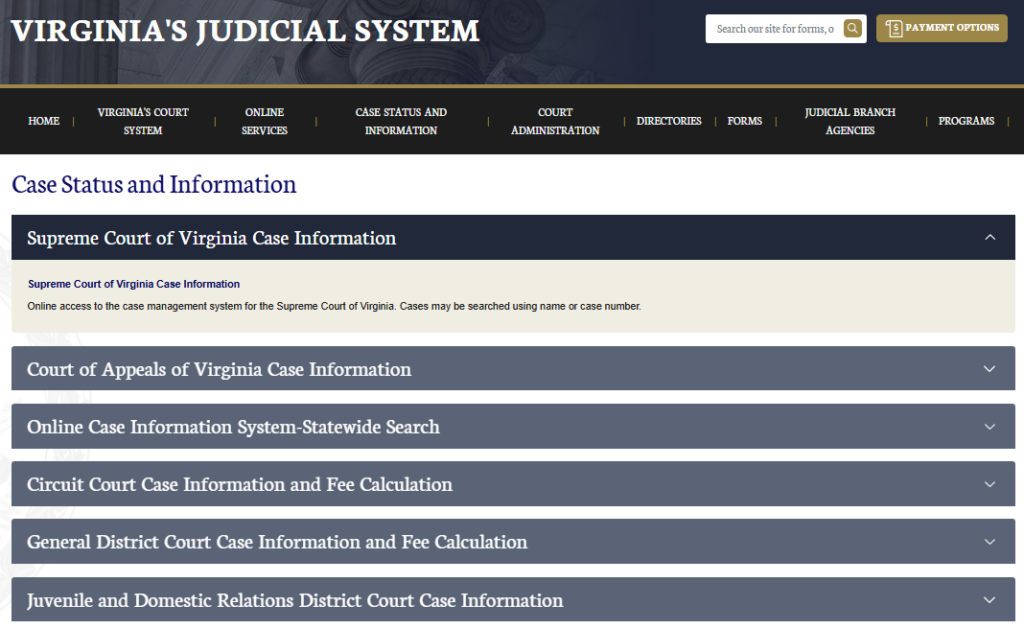
Using the Virginia Judicial System Portal for Court Docket Search in Virginia
The Virginia Judicial System online case information tool provides public court docket details for Chesapeake cases. It works as a centralized database for case schedules, filings, and hearing updates across district and circuit courts. Users start by opening the official case search page. From there, they can run a court docket search in Virginia using simple search fields.
Steps to follow:
- Open the Virginia Judicial System case information page
- Select the correct court type
- Enter party name or case number
- Submit the search request
- Review matching docket entries and hearing listings
Each result shows case status, scheduled hearing dates, and courtroom details. This supports quick case schedule lookup without visiting the courthouse.
Searching by Name or Case Number
The search tool allows two main methods for finding Chesapeake docket records: name-based search and case number search. Each method provides different levels of detail depending on what information is available.
Name-based search:
- Enter full last name or partial spelling
- Add first name for narrower results
- Review multiple case entries linked to the same name
Case number search:
- Enter the full case ID for direct results
- Pulls up a single docket record instantly
- Shows full hearing timeline and case actions
Name searches are useful for broad results, while case number searches give precise case schedule lookup data. Both methods help track court hearing dates lookup details for upcoming sessions.
Filtering Hearing Dates and Docket Results
After running a search, users can review and filter docket listings by hearing dates. This helps locate upcoming court events or past hearing records linked to a specific case.
Filtering options include:
- Date range selection for hearings
- Court location selection within Chesapeake
- Case status filters
- Hearing type classification
These filters help narrow down large result lists into clear, relevant entries. For example, selecting a specific month shows all scheduled hearings for that period.
Chesapeake Court Calendar System
The Chesapeake court calendar system organizes hearing dates, trial listings, and case scheduling in a structured format used across different courts. It helps legal staff, attorneys, and the public track scheduled court events through the court calendar system in VA. This system shows when cases are set for hearings or trials, including daily listings and weekly schedules for planning court activity.
Court Calendar Structure in Chesapeake Courts
The Chesapeake court calendar system is arranged to separate cases by court type and case priority. Each courtroom follows a set schedule that lists cases for a specific day or week.
The structure usually includes:
- Judge assignment
- Case number and case type
- Hearing time slots
- Courtroom location
- Case status (new, continued, or final hearing)
The hearing calendar Chesapeake format helps track civil, criminal, and traffic matters without overlap. Courts group similar cases to manage workload and reduce delays.
Daily vs Weekly Scheduling in the Court Calendar System, VA
The court calendar system VA uses both daily and weekly scheduling formats. Each format serves a different purpose based on case volume and court type.
| Schedule Type | Purpose | Case Handling Style |
|---|---|---|
| Daily Calendar | Short-term hearings | Traffic and minor civil cases |
| Weekly Calendar | Long listings | Criminal trials and civil motions |
Daily calendars often list quick hearings, bond matters, and traffic cases. These move fast through short sessions.
Case Types Listed in Chesapeake Court Calendar
The Chesapeake court calendar system includes multiple case categories. Each category follows a different scheduling pattern based on complexity and court division.
Case types include:
- Criminal cases – arraignments, hearings, and trials
- Civil cases – disputes, claims, and motions
- Traffic cases – violations, fines, and court appearances
- Family-related matters – custody and support hearings
The Chesapeake hearing calendar separates these categories to avoid scheduling conflicts. Criminal and civil matters rarely appear in the same time block.
Types of Cases Listed in Court DocketThe
Chesapeake court docket lists different case types, including criminal, civil, traffic, and family matters. It presents case status schedule, court appearance dates, and trial dates in Chesapeake, VA, in one organized record. These records help show what cases are scheduled, what stage they are in, and when parties need to appear in court.
Criminal and Civil Cases in Chesapeake Court Docket
Criminal cases in the Chesapeake court docket include offenses filed by the state. These range from misdemeanors to felony charges. Each entry shows charge details, filing updates, and hearing dates tied to court proceedings. Civil cases focus on disputes between parties. These often involve money claims, property issues, or contract disagreements. The docket lists scheduled hearings and case status updates for each civil matter.
Entries include:
- Criminal charges with arraignment dates
- Hearing dates for ongoing criminal matters
- Civil disputes linked to property or contracts
- Scheduled court dates for motion hearings
- Case status schedule updates for both case types
Criminal and civil records often change as hearings move forward. Each update reflects a new stage in the process, such as filing, review, or trial scheduling.
Traffic Violations and Family Court Matters in Chesapeake Court Docket
Traffic violations appear frequently in the Chesapeake court docket. These include speeding tickets, driving without a license, and DUI-related offenses. Each record lists court appearance dates and scheduled hearings tied to traffic enforcement cases. Family court matters focus on domestic issues. These include custody disputes, child support cases, and divorce filings. The docket tracks hearing dates and trial dates in Chesapeake, VA, for each family-related case.
| Case Type | Common Issues | Docket Information |
|---|---|---|
| Traffic Violations | Speeding, DUI, license issues | Court appearance dates, hearing status |
| Family Cases | Custody, support, divorce | Trial dates in Chesapeake, VA, are scheduled for hearings |
Case status schedule updates appear regularly across both categories. These updates reflect new filings, rescheduled hearings, or final rulings entered by the court.
How Chesapeake Court Hearing Dates Are Organized
Court hearing dates in Chesapeake follow a structured scheduling system based on case type, filing time, and court capacity. Listings for upcoming hearings in the Chesapeake court come directly from the official docket records tied to each case. The judicial calendar of Chesapeake organizes matters into time slots for criminal, civil, and family proceedings. Hearing dates are assigned after a case enters the system through filing or motion submission. The clerk’s office places each matter into available docket openings based on procedural priority and required notice periods. More urgent matters, such as certain criminal hearings, are often placed earlier than standard civil disputes.
Assignment of dates in the court schedule, Chesapeake, VA
The court schedule in Chesapeake, VA, follows a structured placement method that helps distribute cases across available courtroom sessions.
Steps in date assignment include:
- The case is filed and assigned a docket number
- Case type determines scheduling category
- Available courtroom sessions are reviewed
- Judge availability is matched with docket demand
- An official hearing notice is issued to the involved parties
Criminal, civil, and family cases do not follow the same timeline. Each category has its own scheduling pace based on legal requirements in Chesapeake, Virginia.
Reasons court hearing dates change in the Chesapeake court docket
Court hearing dates often change after initial assignment. The Chesapeake court docket reflects these updates when adjustments occur.
Reasons for schedule changes include:
- Judicial reassignment or courtroom conflicts
- Additional filings that require more preparation time
- Missing evidence or incomplete case documents
- Overlapping priority cases on the same date
- Administrative closures or unexpected disruptions
When changes happen, the updated hearing date replaces the previous entry in the docket record. Parties involved in a case usually receive official notice through court communication channels.
Meaning of continuances in the judicial calendar, Chesapeake
A continuance shifts a scheduled hearing to a later date while keeping the case active. It appears regularly in the judicial calendar in Chesapeake when more time is needed before proceedings continue.
Typical causes include:
- Attorney requests preparation time
- Witness unavailability on the set date
- Pending motions affecting case progress
- Agreement between parties in civil matters
Once granted, the case returns to the docket with a revised hearing slot. This adjustment helps maintain fair case preparation and keeps court scheduling organized without removing the case from the system.
Chesapeake Court Docket vs Case Records
The Chesapeake court docket shows scheduled hearings, while case records contain official legal documents tied to a case. The court calendar works as a timeline system that organizes when hearings occur and how cases progress. These three terms often get mixed up, yet each one serves a different purpose in court case tracking.
Chesapeake Court Docket Meaning vs Case Records
The court docket works as a scheduling log for hearings in Chesapeake courts. It lists dates, courtroom numbers, and case activity updates. For example, docket entries may show motion hearings, trial dates, or status conferences.
In contrast, case records store full legal documentation. These include:
- Complaints and petitions
- Court orders and judgments
- Evidence filings
- Motions submitted by attorneys
- Clerk-issued documents
Meanwhile, docket data focuses on “what is scheduled,” not full legal content.
Difference points:
| Category | Purpose | Content Type |
|---|---|---|
| Docket | Scheduling system | Hearing dates, court events |
| Case Records | Documentation system | Filed legal papers |
| Calendar | Timeline tracking | Case progression overview |
Then, the calendar system connects both by showing how cases move through time. It reflects when hearings occur and how long a case remains active in Chesapeake courts.
Docket Entries, Court Records, and Hearing Timeline
Docket entries act like real-time updates for civil and criminal cases in Chesapeake courts. They change when hearings are rescheduled or new motions are filed. Case records stay fixed unless the court issues new filings or corrections. This makes them the official archive of legal history.
The hearing calendar helps users see case flow across weeks or months. For example:
- Criminal cases often show multiple short hearings
- Civil disputes may list longer gaps between dates
- Appeals follow separate scheduling tracks
Next, users often check docket information for quick status updates, while case records are used for detailed legal review or background verification.
(FAQs) About Chesapeake Court Docket
The Chesapeake court docket is updated regularly as new cases are filed and hearing times shift. Users often review the court schedule, Chesapeake, VA, and hearing calendar to confirm dates, track case movement, and stay informed about upcoming court activity.
How often is the Chesapeake court docket updated?
The Chesapeake court docket is updated every day, and in some cases, multiple times within the same day. Updates appear whenever new filings are entered, hearings are rescheduled, or case status changes occur in the system. Court staff record changes such as new case entries, judge schedule adjustments, continuances, and final decisions. These updates help keep the court schedule in Chesapeake, VA, accurate for both public users and legal professionals. Some changes show instantly, while others appear after official processing steps.
Can I check court dates online?
Yes, court dates can be checked through official online portals that display scheduled hearings and case details. These systems allow users to view the hearing calendar and confirm upcoming court appearances without visiting the courthouse. Online records often include case numbers, party names, assigned courtroom, and scheduled hearing times. They may also show case status updates such as active, postponed, or closed. This helps users stay updated on the Chesapeake court docket in a quick and structured way.
What is a court calendar used for?
A court calendar is used to organize all hearings scheduled within Chesapeake courts on a daily and weekly basis. It helps judges, clerks, and attorneys manage courtroom time and keep cases properly scheduled. The hearing calendar includes criminal hearings, civil disputes, family matters, and traffic-related cases. It prevents scheduling conflicts and keeps courtroom activity organized. It also helps the public understand when specific cases are set to be heard within the court schedule in Chesapeake, VA.
Are all hearings public?
Most hearings listed in the Chesapeake court docket are open to the public, especially criminal and civil matters. Public hearings allow individuals to observe court proceedings and stay informed about case activity within the local court system. Some hearings remain closed due to privacy laws or sensitive case types. These may include juvenile cases, sealed records, and certain family law matters. In such situations, only authorized parties can attend, while others are restricted from entry under court rules.
Can court dates change after they are posted?
Yes, court dates listed in the Chesapeake court docket can change after being posted. Changes often happen due to judge availability, attorney requests, or case delays. The court schedule in Chesapeake, VA, may show updated hearing times if a case is postponed or moved to another courtroom. These updates help keep records accurate and reflect real-time court activity.