The Chesapeake General District Court handles everyday legal matters within Chesapeake, Virginia, including traffic violations, misdemeanors, and limited civil disputes. It operates under the Virginia court system and serves as a local trial-level court where judges hear cases without a jury. The Chesapeake General District Court plays a central role in processing district court Chesapeake, VA cases, especially those involving minor criminal offenses, traffic issues, and early-stage hearings for more serious matters.
This court works within a defined legal jurisdiction set by Virginia law, meaning it only handles specific case types and monetary limits. In most district court Chesapeake, VA cases, judges review evidence, hear arguments, and issue rulings directly. The structure supports faster case handling and helps maintain order across the local court system in the Virginia framework. Court clerks manage filings, records, and scheduling, which supports consistent case flow and public record organization. From traffic citations to misdemeanor offenses, the Chesapeake General District Court ensures cases are processed under state rules with clear procedural steps.
What Is the Chesapeake General District Court?
The Chesapeake General District Court is a local court in Virginia that handles minor criminal, traffic, and civil cases. It serves as part of the Virginia district court system and operates at a lower court level within the state judicial structure. This court handles early-stage case processing, short hearings, and smaller disputes that do not require a jury trial.
Role in the Virginia District Court System
The Chesapeake General District Court plays a key role in the Virginia district court system by managing a high volume of everyday legal matters. It works as a first-level court where many cases begin and are resolved quickly through hearings or settlements. This court focuses on case handling level functions that do not involve complex trials. Judges review evidence, hear testimony, and issue rulings based on state law. The court structure supports fast processing of routine matters across Chesapeake.
Responsibilities include:
- Traffic violations such as speeding or reckless driving
- Misdemeanor criminal charges
- Civil claims involving smaller financial amounts
- Preliminary hearings for felony cases
The judicial authority here remains limited compared to higher courts. It does not conduct jury trials for major cases. Instead, it focuses on fact-finding and issuing decisions within its assigned legal scope.
Difference From Circuit Court in Chesapeake
The Chesapeake General District Court differs from the circuit court mainly in case type, authority level, and trial structure. It operates at a lower court level, while the circuit court handles more serious legal matters.
Differences include:
- Case severity: The General District Court handles minor offenses, while the circuit court handles serious criminal and large civil cases
- Jury trials: Not available in the General District Court, but available in circuit court
- Appeals: Many General District Court cases can move to the circuit court for a new hearing
- Case complexity: Simpler cases stay in the district court, complex disputes go to the circuit court
This structure helps divide workload across Virginia courts and supports organized case handling across different judicial levels.
Basic Legal Authority and Functions
The Chesapeake General District Court holds authority under Virginia law to hear specific categories of cases. Its jurisdiction focuses on limited civil disputes, traffic matters, and misdemeanor offenses.
| Area | Court Function |
|---|---|
| Criminal matters | Misdemeanor offenses, warrants, arraignments |
| Traffic cases | Speeding, DUI preliminary hearings, violations |
| Civil disputes | Claims within monetary limits set by Virginia law |
| Preliminary hearings | Review of felony charges before transfer |
Judges in this court follow Virginia statutes and local court procedures while issuing rulings. The clerk’s office manages filings, records, and case scheduling, supporting smooth case flow within the lower court system.
Types of Cases Handled in District Court, Chesapeake, VA
Chesapeake General District Court handles a wide range of lower-level legal matters across criminal, traffic, and civil categories. Most cases involve misdemeanors, traffic violations, and civil disputes that fall within its defined case jurisdiction. The district court in Chesapeake, VA, cases mainly focus on minor offenses, small-value disputes, and early-stage criminal hearings. This court acts as the first level of formal court processing for many routine legal matters in Chesapeake, Virginia.
Misdemeanor Criminal Charges in Chesapeake District Court
Chesapeake General District Court hears misdemeanors that fall under Virginia law as lower-level criminal charges. These cases do not reach felony court unless they escalate or involve serious circumstances.
Misdemeanor criminal charges include:
- Simple assault cases
- Shoplifting under a set value
- Disorderly conduct
- Trespassing incidents
- First-time minor drug possession
These matters involve criminal charges that carry penalties such as fines, probation, or short jail sentences. Judges review evidence, hear arguments, and set rulings based on state law.
Traffic Violations and Hearings in District Court, Chesapeake, VA Cases
Traffic-related matters make up a major share of the district court in Chesapeake, VA. These cases involve traffic violations that range from minor infractions to serious moving offenses.
Typical traffic hearings include:
- Speeding tickets
- Driving without insurance
- Reckless driving charges
- Running red lights or stop signs
- Driving with a suspended license
These hearings usually involve citations issued by law enforcement. The court then reviews the citation, driver record, and officer testimony if required.
A simple structure of traffic case flow:
| Stage | Description |
|---|---|
| Citation Issued | Defendant appears before the judge |
| Court Appearance | Defendant appears before judge |
| Hearing | Evidence and statements reviewed |
| Decision | Fine, dismissal, or penalty assigned |
This structure keeps traffic litigation organized and consistent across the Chesapeake General District Court.
Civil Disputes and Small Claims in Chesapeake District Court
The court also handles civil disputes involving individuals, landlords, tenants, and local businesses. These cases fall under civil litigation with limited financial claims.
Civil matters include:
- Unpaid rent disputes
- Contract disagreements
- Property damage claims
- Recovery of small debts
- Security deposit conflicts
Small claims cases usually involve amounts up to a set legal limit under Virginia law. These cases are less formal and often resolved faster than higher civil courts.
Traffic Hearings and Violations in Chesapeake Court
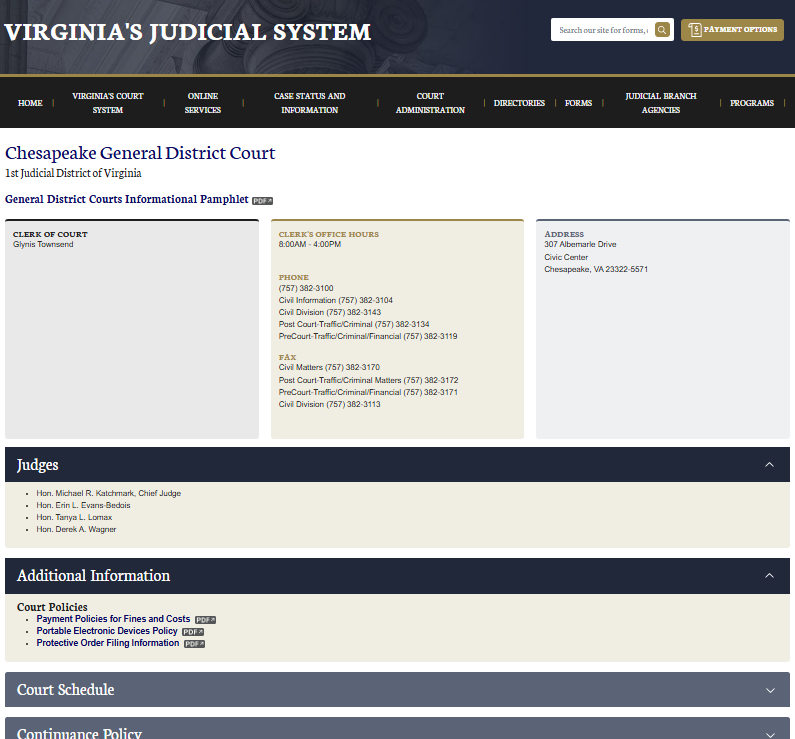
Traffic hearings in Chesapeake General District Court handle cases like speeding tickets, reckless driving charges, and other driving offenses. These matters fall under the district court in Chesapeake, VA, https://www.vacourts.gov/courts/gd/chesapeake/home, where judges review citations and decide outcomes. Most drivers attend traffic hearings in Chesapeake court after receiving a citation from law enforcement. Outcomes may include court fines, DMV penalties, or driving record points.
Traffic Violations and Citation Process in Chesapeake Court
Traffic violations in Chesapeake usually begin with a citation issued by police officers. The citation lists the alleged offense, court date, and required response steps.
Cases include:
- Speeding tickets on highways and city roads
- Reckless or careless driving charges
- Red light or stop sign violations
- Driving without a valid registration or insurance
- Failure to appear notices tied to earlier tickets
Once a citation is issued, the driver may:
- Pay the fine before the hearing date
- Appear in court and contest the charge
- Request a continuance through the clerk’s office
The court reviews each citation process case individually. Penalties can involve court fines, DMV penalties, and license points based on Virginia traffic laws.
Court Appearance Rules and Hearing Process
Drivers attending traffic hearings must follow set appearance rules inside Chesapeake General District Court. Missing a hearing may lead to additional penalties or license suspension.
Steps in the process:
- Check in at the clerk’s window before the docket starts
- Wait for the case name to be called
- Present license, registration, and related documents
- Speak before the judge when asked
Many driving offenses in Chesapeake, VA, cases are resolved on the same day. Some cases may be postponed if records or officers are unavailable.
Misdemeanor Cases in Chesapeake General District Court
Misdemeanor cases in the Chesapeake General District Court involve criminal offenses that carry lighter penalties compared to felonies. These cases usually involve short jail time, fines, or probation, depending on the charge. The court handles arraignments, hearings, and sentencing for these offenses. The focus of misdemeanors in Chesapeake court proceedings is to review legal charges, determine responsibility, and assign penalties based on Virginia law.
What Counts as a Misdemeanor in Chesapeake Court
A criminal misdemeanor is an offense that is less serious than a felony but still part of the criminal justice system. In the Chesapeake General District Court, these cases follow a structured process that includes a court hearing, review of evidence, and final sentencing.
Misdemeanor charges are grouped under different offense classification levels in Virginia:
- Class 1 misdemeanor
- Class 2 misdemeanor
- Class 3 misdemeanor
- Class 4 misdemeanor
Each class carries different penalty ranges based on state law and case details.
Common Misdemeanor Case Types
The court handles a wide range of misdemeanor matters. These cases often appear in daily court dockets.
Common examples include:
- Simple assault or disorderly conduct
- Petit larceny (theft under a set value)
- Driving without a valid license
- First-time DUI-related charges
- Public intoxication
- Trespassing incidents
These misdemeanors in Chesapeake court cases usually move faster than felony matters since the legal process is less complex.
Penalties and Sentencing in General District Court
Misdemeanor sentencing depends on charge class, prior record, and facts presented during the court hearing. The judge in the Chesapeake General District Court reviews police reports, witness statements, and legal arguments before issuing a decision.
| Misdemeanor Class | Jail Time | Fine Range |
|---|---|---|
| Class 1 | Up to 12 months | Up to $2,500 |
| Class 2 | Up to 6 months | Up to $1,000 |
| Class 3 | No jail time | Up to $500 |
| Class 4 | No jail time | Up to $250 |
Sentencing may also include probation, community service, or court-ordered programs, depending on the legal charges and case history.
Civil Disputes and Small Claims Court Process
Small civil disputes in Chesapeake are handled through the Virginia General District Court, where individuals bring monetary claims for unpaid debts, damages, or contract issues. The small claims process offers a simplified path for resolving lower-value civil disputes without complex procedures. This process focuses on quick dispute resolution, written court petitions, and clear presentation of facts by both parties.
Small Claims Limit in Virginia Courts
The small claims Virginia court system handles cases with a limited monetary value. In Chesapeake, these cases fall under General District Court jurisdiction.
The maximum claim amount for small claims cases in Virginia is:
- Up to $5,000 in most civil disputes
- Cases above this amount move into regular civil dockets
- Common claims include rent issues, unpaid services, and property damage
| Case Type | Court Handling | Claim Range |
|---|---|---|
| Small Claims | General District Court | Up to $5,000 |
| Standard Civil Case | General District Court | Above $5,000 |
This limit shapes how civil disputes Chesapeake residents file monetary claims and choose the correct court track.
Filing Process for Civil Case Filings
The legal claim process in Chesapeake General District Court follows a structured filing method. A plaintiff starts the civil case filing by submitting a court petition.
Basic steps include:
- Filing a warrant in debt or civil complaint form
- Submitting details of the monetary claim
- Paying the required filing fee
- Receiving a court date notice for both parties
- Serving notice to the defendant through approved methods
Court clerks handle paperwork intake and scheduling. Proper documentation helps avoid delays in dispute resolution.
Court Clerk Office and Records Access
The court clerk’s office in Chesapeake, VA, manages court filings, public records, and official case documentation for the district court system. It keeps legal paperwork organized and maintains case files for civil, criminal, and traffic matters.
Role of the Clerk in Court Administration
The clerk’s office in Chesapeake, VA, handles daily court records, filings, and official documentation linked with district court cases. The office works with judges and court staff to keep case records updated and properly stored within the case records system. It also manages public records and supports court administration through structured recordkeeping of legal documentation tied to each case.
Filing Process for Legal Documents
Legal filing in the Chesapeake court system follows a structured process where documents are reviewed before being added to official records. Each submission is checked for basic requirements, then recorded into the court database with a case number. After this, the document becomes part of the permanent legal record linked to civil or criminal proceedings in the District Court of Chesapeake, Vs.
Case Lookup and Court Records System
Court records systems in Chesapeake allow review of public case information such as hearing dates, case status, and filed documents. The clerk’s office organizes these records so case details remain consistent and traceable across court proceedings. Requests for certified copies follow formal court procedures and are issued based on official record availability within the system.
How Court Hearings Work in Chesapeake District Court
Court hearings in the Chesapeake district court follow a structured legal process where cases are reviewed by a judge. Each hearing brings the involved parties before the court for review of facts, evidence, and legal arguments.
Summons and Case Start Process
A court hearing begins after a summons is issued following a complaint or charge. The summons informs the defendant about the case details and the required court appearance. Once issued, the case is scheduled on the court calendar, and the defendant is required to appear on the assigned date for further proceedings in Chesapeake court hearings.
Court Appearance and Hearing Procedure
During the hearing, both sides present their statements and supporting materials before the judge. The process includes presentation of facts, review of documents, and questioning of witnesses if required. The judge listens to both parties and evaluates the information presented within the courtroom process before moving toward a decision.
Hearing Timeline and Case Flow
The timeline for district court Chesapeake, VA, cases depends on case type and complexity. Some cases are completed in a single hearing, while others move through multiple dates,s such as initial appearance, review sessions, and final hearing. Traffic and minor civil matters usually progress faster compared to detailed civil disputes or contested cases.
Judgment and Case Resolution Process
After hearings are completed, the judge issues a decision based on the facts and legal rules presented. The outcome may include dismissal, fines, court orders, or rulings related to guilt or responsibility. Once judgment is delivered, the clerk’s office updates the official record, and the case becomes part of the permanent court records system.
Court Fines, Penalties & Outcomes
Court fines in Chesapeake General District Court depend on the charge, case facts, and judgment decision from the court. Monetary fines and legal penalties vary for traffic cases, misdemeanors, and other violations heard under Virginia law. Sentencing outcome may include fines, court costs, license points, or other penalties set by the judge. Each case outcome follows a formal judgment decision based on evidence and Virginia statutes.
Fines Structure in Chesapeake General District Court
Court fines in Virginia follow a set structure based on violation type and severity. Minor traffic violations often carry lower monetary fines, while serious charges lead to higher penalties.
Fines may combine several parts:
- Base fine set by the Virginia code
- Court processing costs
- Added fees for missed deadlines
- Extra penalties for repeat violations
| Violation Type | Typical Monetary Fine Range | Extra Legal Penalties |
|---|---|---|
| Speeding ticket | $50 – $300+ | DMV points |
| Reckless driving | $200 – $1,000+ | License suspension risk |
| Minor traffic offense | $30 – $150 | Court costs |
These court fines in Virginia cases depend on the judgment decision and case history. Judges may adjust amounts based on driving record and prior offenses.
Traffic Penalties and Case Outcomes in Chesapeake Court
Traffic penalties in Chesapeake court cases often include more than fines. Legal penalties may extend to driving record impacts and license consequences.
Sentencing outcome types include:
- Monetary fines issued by the court
- DMV demerit points added to the record
- Driving license suspension in serious cases
- Mandatory driving improvement programs
- Probation for repeat violations
A judgment decision may differ even for similar charges. Evidence strength, prior record, and violation type shape final case results.
(FAQs) About Chesapeake District Court
The Chesapeake General District Court handles a variety of minor civil, criminal, and traffic matters across Chesapeake, Virginia. Most users turn to this court for quick hearings, case status updates, and small disputes. Below are common questions about the Chesapeake General District Court, a district court in Chesapeake, VA, cases, and basic court procedures.
What cases go to the district court?
The Chesapeake General District Court hears cases that do not require jury trials and are handled by a judge. These matters usually include traffic violations, misdemeanors, landlord-tenant issues, and small civil disputes. The court also handles preliminary hearings for more serious criminal charges before they move to higher courts. Most district court Chesapeake, VA cases involve everyday legal issues that affect residents directly. For example, unpaid rent disputes, driving offenses, and minor assault cases are common. The court also reviews warrant matters and bond hearings. All cases follow structured court procedures set by Virginia law.
How to check case status?
Case status for Chesapeake General District Court matters can be checked through official court record systems managed by the clerk’s office. Users can search by case number, party name, or hearing date. This helps track updates related to filings, hearings, and final decisions. The case lookup system shows hearing schedules, judge decisions, and case progress. Updates depend on the clerk’s entry after each hearing. People often use it to confirm upcoming court dates or review past case activity. This supports clear tracking of court procedures without visiting the courthouse.
How do small claims work?
Small claims cases in Chesapeake General District Court involve disputes over limited monetary amounts. These cases are usually simple and do not require complex legal paperwork. The judge hears both sides and reviews basic evidence such as receipts, agreements, or written proof. The hearing process is informal compared to higher courts. Both parties present their side directly to the judge. No jury is involved, and decisions are based on facts presented during the hearing. This process helps resolve minor financial disputes efficiently within the court system.
Do I need a lawyer?
A lawyer is not required for Chesapeake General District Court cases, and many individuals represent themselves. This is common in traffic tickets, small claims, and minor misdemeanor cases. The court allows self-representation under Virginia law. Legal help may be useful in more complex situations involving criminal charges or disputed evidence. A lawyer can assist with filing, preparation, and court procedures. However, basic cases are often handled without legal representation, depending on case difficulty and personal comfort level.
How long do cases take in district court?
Cases in Chesapeake General District Court may be resolved in a single hearing or may take several weeks, depending on case type and court schedule. Traffic and small civil matters often finish on the first appearance date. More complex criminal or contested cases may require multiple hearings. The timeline depends on court procedures, evidence review, and witness availability. For example, in the district court in Chesapeake, VA, cases like traffic tickets can close quickly, while landlord disputes or criminal hearings may be postponed for further review. Hearing dates are set by the clerk’s office, and changes may occur based on court workload or legal requirements.