The Chesapeake Clerk of Court Office manages court records, legal filings, and official paperwork for Chesapeake. It handles case registration, document processing, and certified record issuance for residents, attorneys, and agencies. The Chesapeake clerk of court supports daily court operations by keeping case files organized and accurate across civil, criminal, and traffic matters. It also works as a central point for docket entry, filing intake, and court document verification. Case tracking, record indexing, and file maintenance stay aligned with court procedures.
The court clerk at the Chesapeake, VA, office plays a key role in court administration and records office functions. It processes legal documents, maintains case records, and supports filing procedures for court users. The office also keeps public records updated and assists with requests for certified copies. Legal document handling, case management, and public records request processing remain part of its daily workflow. Court filings, judgment entries, and archive maintenance support smooth judicial operations and accurate record keeping across the local court system.
What Does the Chesapeake Clerk of Court Do?
The Chesapeake court clerk’s office manages many daily court functions that keep local courts organized and active. The clerk handles legal filings, maintains court records, supports courtroom activity, schedules hearings, and authenticates official documents.
The office plays a central role in judicial administration across Chesapeake courts. Court staff work with judges, attorneys, law enforcement agencies, and members of the public every day. Their work supports accurate case management and smooth courthouse operations. The office is led by Hon. Alan P. Krasnoff, the elected Clerk of the Chesapeake Circuit Court, who oversees filings, records management, and courthouse administration functions.
Core Responsibilities of the Clerk’s Office
The Chesapeake Clerk of Court handles a wide range of administrative duties tied to court cases and public records. The office processes thousands of documents each year for civil, criminal, family, probate, and traffic matters.
Clerk responsibilities include:
- Accepting and processing legal filings
- Maintaining court records and case files
- Managing court calendars and hearing schedules
- Collecting court fees and fines
- Issuing certified copies of records
- Authenticating legal documents with court seals
- Recording judgments, liens, and court orders
- Supporting courtroom procedures during hearings
Court clerks review filings for completeness before entering them into the court database. This step helps reduce filing errors and delays. Staff members may reject incomplete paperwork if the required information is missing.
| Clerk Duty | Purpose Within Chesapeake Courts |
|---|---|
| Case filing | Starts or updates legal proceedings |
| Records maintenance | Preserves official court information |
| Scheduling hearings | Keeps courtroom calendars organized |
| Document certification | Confirms records as official copies |
| Fee collection | Supports courthouse administration |
How the Clerk Supports Court Operations
The Chesapeake court clerk’s office supports daily courthouse operations behind the scenes. Court clerks prepare case files before hearings so judges have the documents needed during proceedings. Staff members coordinate courtroom schedules with attorneys, deputies, and court personnel. This process helps avoid scheduling conflicts and courtroom delays.
The clerk’s office supports several parts of case management, including:
- Updating case status records
- Tracking court deadlines
- Recording hearing outcomes
- Entering judgments into the court system
- Maintaining public court indexes
Many residents contact the office for certified court documents, marriage licenses, probate filings, or land records. Clerks help direct visitors to the correct department and explain the filing steps required by the court.
Chesapeake Court Filing Services
Chesapeake Court Filing Services handles the submission of legal documents to the clerk’s office for civil, criminal, probate, and family matters. These services set clear steps for court filings, including docket filing updates, e-filing, and payment of filing fees. The clerk’s office reviews each submission for format, accuracy, and required details before adding it to the official court record. This process supports consistent legal filing procedures across Chesapeake courts.
Civil Court Filings
Civil filings cover disputes between individuals, businesses, or organizations. These civil filings include contract issues, property disputes, and small claims matters.
The filing process usually follows a structured path:
- Case form preparation with correct court forms
- Submission through e-filing or in-person filing
- Payment of required filing fees
- The clerk assigns a docket number for tracking
Accepted documents include complaints, motions, summons, and supporting exhibits. Deadlines depend on case type and court schedule, so timely submission plays a key role in docket filing progress.
Criminal Case Filing Procedures
Criminal case filings follow strict procedures linked to law enforcement and prosecuting agencies. These criminal filings usually begin after arrest reports or formal charges.
Typical steps include:
- Submission of charging documents by authorized agencies
- Review of probable cause documents
- Entry into the court docket system
- Assignment of case number for tracking
Accepted records include arrest warrants, indictments, affidavits, and supporting evidence forms. Filing deadlines often depend on statutory timelines and court rules.
Probate and Family Court Documents
Probate filing covers estates, wills, guardianship, and related family matters. These filings often require detailed documentation and supporting affidavits.
Commonly accepted documents include:
- Wills and codicils
- Estate inventory forms
- Guardianship petitions
- Divorce and custody filings
The clerk reviews signatures, witness details, and required certifications. Filing fees may vary based on case category.
Obtaining Chesapeake Court Records and Case Documents
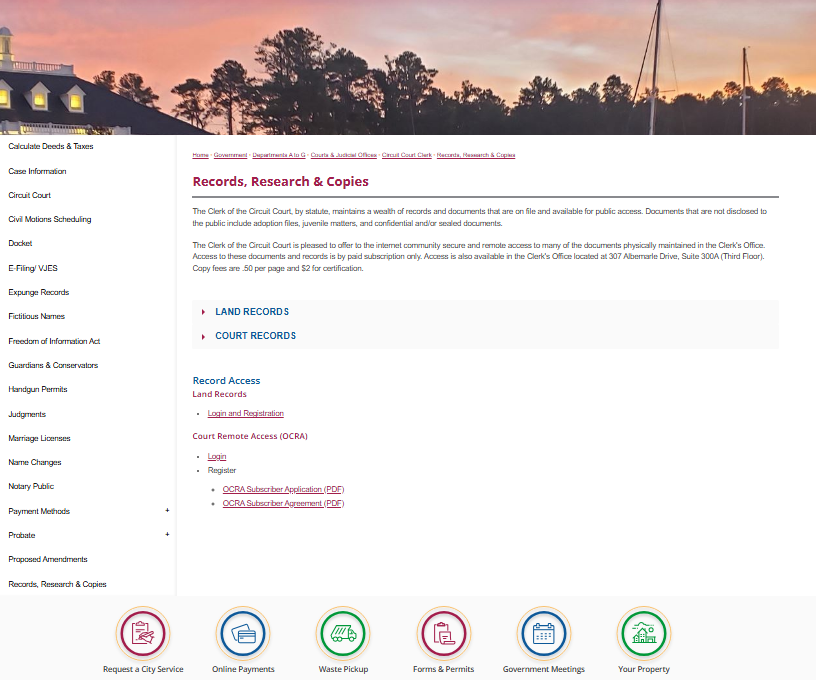
Chesapeake court records and case documents are available through structured court systems that maintain legal records for public use. These materials include public court records, case files, https://www.cityofchesapeake.net/1207/Records-Research-Copies, and certified copies of filings kept within official archives. Records are managed through formal records access procedures that allow individuals to review case documents, submit public records requests, and obtain document retrieval services for legal needs.
How Court Records Are Maintained
Chesapeake court records are organized through a structured case management system used by court offices. Each case file is stored as part of the official court archives and linked to docket information.
These legal records may include:
- Civil case filings
- Criminal case summaries
- Hearing schedules and outcomes
- Judicial orders and rulings
- Supporting evidence filed with the court
Court staff updates case documents as proceedings move forward. Older files are preserved in digital systems or physical archives for long-term recordkeeping. This system supports consistent document retrieval for public court records when permitted.
Requesting Certified Copies
Certified copies of case documents are issued by the court clerk’s office for official use. These copies carry a seal that confirms authenticity for legal and administrative purposes.
Steps involved in requesting certified copies include:
- Identifying the case number or party names
- Submitting a written request to the clerk’s office
- Paying applicable copy and certification fees
- Waiting for processing and verification
Certified records are often required for legal filings, background checks, and court-related proceedings. Fees may vary depending on document type and page count.
Viewing Public Court Documents
Public court documents in Chesapeake are available through structured record systems maintained by the court. These files may be reviewed in person or through authorized electronic systems, depending on record type.
Typical public court documents include:
- Case dockets
- Non-confidential motions
- Final judgments
- Hearing summaries
- Scheduling notices
Document retrieval systems help locate case documents using party names, case numbers, or filing dates. Many records remain open under public court records policies, while some require formal public records requests for full copies.
Chesapeake Clerk of Court Services Available to the Public
Chesapeake Clerk of Court services cover legal record handling, filings, and certified document support for residents. The clerk’s office in Virginia also manages key public records such as marriage licenses, probate records, and land records. The Chesapeake Clerk of Court connects residents with official judicial and administrative documentation used in daily legal matters. Chesapeake court services include civil filings, property records, and certified documents required for identity checks, estate matters, and real estate transactions. The office keeps organized records that support legal clarity across multiple case types.
Marriage License Services
Marriage license services support couples who plan legal marriage registration in Chesapeake. The clerk’s office in Virginia processes applications and issues licenses for official state documentation.
Functions include:
- Submission of marriage license applications
- Issuance of certified marriage licenses
- Storage of marriage records for verification
- Fee handling linked with filings
These records hold legal value for name changes, insurance updates, and family documentation needs.
Probate and Estate Records
Probate records involve wills, estate handling, and court-managed asset distribution. Chesapeake court services stores these documents for legal reference and estate settlement matters.
Probate-related records include:
- Wills submitted to the court
- Estate administration paperwork
- Executor appointment records
- Probate case status files
These records help families, attorneys, and courts confirm lawful distribution of assets.
Land and Property Records
Land and property records track ownership, transfers, and legal claims tied to real estate. The clerk’s office in Virginia maintains these filings for property verification and historical reference.
Typical records include:
- Property deed filings
- Title transfer documents
- Lien records tied to properties
- Ownership history files
These documents support buyers, sellers, and legal professionals reviewing property status.
Chesapeake Court Administration and Case Management
Chesapeake court administration handles the organization of daily court functions and supports smooth case management across different court levels. Case management refers to how cases are tracked, assigned, and processed through each stage of legal proceedings. These systems keep judicial scheduling, docket management, and courtroom coordination aligned for steady court operations. Court administration in Chesapeake focuses on maintaining order in filings, hearings, and case updates. It connects clerical work with judicial needs so that each case moves through the system in a structured way.
How Court Dockets Are Managed
Court dockets list all active cases scheduled for hearings or review. The clerk’s office updates these records as cases move through legal stages.
Elements of docket management include:
- Entry of new cases into the system
- Assignment of case numbers for tracking
- Updates after motions, rulings, or continuances
- Daily review of scheduled hearings
Docket management supports accurate legal proceedings by keeping records current. Judges and attorneys rely on this structure to prepare for hearings and filings.
Coordination Between Courts and Clerk Offices
Courtroom coordination depends on steady communication between judges, staff, and the clerk’s office. The clerk’s office handles records, filings, and scheduling requests tied to each case.
Coordination tasks often include:
- Sharing case status updates with court staff
- Processing legal documents submitted by attorneys
- Aligning hearing dates with courtroom availability
- Updating records after court actions
This coordination supports case flow from filing to final decision. It also reduces scheduling conflicts and keeps records consistent across departments.
Court Scheduling and Hearings
Judicial scheduling in Chesapeake court systems follows structured time slots for hearings, trials, and motions. The clerk office works with court staff to assign available courtroom time.
Scheduling actions include:
| Activity | Function |
|---|---|
| Hearing setup | Assigns date and courtroom |
| Continuance handling | Reschedules postponed cases |
| Trial scheduling | Allocates extended court time |
Court scheduling supports efficient case progression by organizing time for each legal matter. It also helps attorneys and litigants prepare for upcoming proceedings through clear calendar records.
How to Request Public Records From the Clerk’s Office
Public records requests at the Chesapeake Clerk of Court Office are submitted through formal written or in-person document requests. These requests allow individuals to obtain court records, filings, and other open records maintained by the office. Public records requests often include court files, case dockets, and archived filings held by the Clerk’s Office. These court records requests follow structured steps aligned with state open records laws and FOIA requests where applicable.
Submitting Records Requests
Submitting public records requests can be completed through written forms, email, mail, or direct submission at the Clerk’s Office counter. FOIA requests may apply to certain administrative files and court-related documents, depending on record type.
Steps for submitting document requests include:
- Provide written document requests with clear case details.
- Submit the request through official email, mail service, or office counter.
- State whether plain copies or certified copies are needed.
- Wait for confirmation on the records retrieval progress and next steps.
Clear submission details help reduce delays in court records requests and improve matching with the correct file.
Information Needed for Record Searches
Record searches depend on accurate details linked to the case. Missing or incomplete details can slow down record retrieval for public records requests.
Details requested include:
- Full names of involved parties
- Case number, if available
- Approximate filing date range
- Case type, such as civil, criminal, or traffic
- Specific document type, like order, judgment, or filing
Providing precise data helps staff locate open records faster within court databases and archives.
Processing Times and Restrictions
Processing times vary based on record type, workload, and storage format. Some document requests are completed quickly, while older archives may require more time for manual retrieval. Restrictions may apply for sealed cases, juvenile matters, or confidential filings protected under state rules. FOIA requests may also require review before release.
| Request Type | Typical Time | Notes |
|---|---|---|
| Recent cases | 1–3 days | Digital records processed faster |
| Older archives | 5–10 days | Manual search required |
| Restricted files | Varies | FOIA review may apply |
Court records requests depend on case availability and legal review steps tied to open records requirements.
Chesapeake Clerk of Court Fees and Document Costs
Court fees in Chesapeake vary based on case type and filing category. Document fees apply when requesting copies, certifications, or record retrieval from the clerk’s office. Costs linked with filings and records are set by court rules and state fee schedules. These court charges often include filing costs, certified copy fees, and payment processing charges.
The Chesapeake Clerk Court Fees
Court fees differ depending on the type of legal action or record request. Civil filings, traffic cases, and family matters carry separate court charges. Document fees also apply for printed or certified records.
Typical fee categories include:
- Filing costs for new civil or criminal case submissions
- Certified copy fees for official court records
- Document fees for printed case files or transcripts
- Payment processing fees for card or online transactions
- Court charges tied to motions, appeals, or amendments
Filing costs often increase when multiple motions or requests are added to a single case. Certified copy fees depend on the number of pages and certification type requested.
Payment and Document Cost Breakdown
The Chesapeake Clerk of Court accepts different payment methods, and each method may carry separate processing charges. Fees are collected at the time of filing or document request submission.
| Fee Type | Description | Typical Use |
|---|---|---|
| Filing Costs | Case initiation charges | Civil, criminal, or family filings |
| Document Fees | Cost per page or record set | Court file copies |
| Certified Copy Fees | Authentication charges | Verified legal records |
| Payment Processing | Transaction handling fees | Card or online payments |
Court staff applies standard fee schedules when processing requests. Payment methods such as cash, money order, or card may affect final processing costs. Document fees increase with bulk record requests or older archived files.
FAQs About Chesapeake Clerk of Court
The Chesapeake Clerk of Court works as the main filing office for judicial records and court services in Chesapeake. This office handles legal records, case documents, and supports public availability of judicial records in line with state rules. It also manages many record requests and filing duties for local courts.
What does the Chesapeake Clerk of Court do?
The Chesapeake Clerk of Court acts as the main filing office for all court-related records in the city. This office records case filings, stores legal records, and maintains structured judicial records for civil, criminal, and traffic matters. Court staff also coordinate daily court operations with judges and attorneys. The office supports the organization of court schedules and case documentation. It also responds to requests related to legal records held in the system.
Are Chesapeake court records public?
Chesapeake court records are generally available for public viewing under Virginia state rules. These judicial records include civil cases, criminal matters, and traffic-related files. Some records remain restricted when sealed by court order or protected under law. The filing office handles both open and restricted case files based on legal status. This system supports transparency while protecting sensitive case information.
How can court records be requested?
Court records requests are handled through the filing office, where case details are reviewed before processing. Requestors usually provide names, case numbers, or case types to locate the correct judicial records. Written requests are common, and some matters are handled in person at the courthouse. Fees may apply for printed copies or certified documents. Each request is checked against case files before any record release.
How are certified copies obtained?
Certified copies come from the clerk’s office and carry official court validation for legal use. These documents are stamped and verified to confirm authenticity. Requestors submit case details and pay a certification fee for processing. The filing office then prepares the certified version from official legal records. These copies are often used for legal filings, financial matters, or official verification purposes.
What documents can be filed with the clerk?
The Chesapeake Clerk of Court handles many types of filings connected to judicial records and court services. Civil complaints, criminal case documents, traffic citations, and probate papers are commonly filed. The office also processes property-related filings and estate records. Each document is recorded and stored within the legal records system for future reference. This filing system supports structured case management in the courts.