
Chesapeake court forms support official filings used within Chesapeake, Virginia, courts for civil, family, traffic, and related case actions. Chesapeake court forms provide standardized legal paperwork that supports structured case submission and procedural filing requirements in local court operations. These legal documents follow Virginia court formatting rules and help maintain a consistent record handling across different case types. Court staff and clerks process these forms as part of daily judicial administration work.
Residents, attorneys, and self-represented users complete these legal forms for filings such as motions, responses, case initiation, and record updates within the court system. The court paperwork VA Chesapeake includes structured documents used for district and circuit court matters, covering both simple and complex case submissions. Each form supports accurate case tracking, docket entry, and official communication within the Chesapeake court system.
What Are Chesapeake Court Forms?
Chesapeake court forms are standardized legal documents used for filing cases, motions, and requests in Virginia courts. These forms organize case information in a consistent format for paperwork submission across different court matters. These documents act as official legal templates that support filing documents in a structured way. They help courts process requests https://www.courts.state.va.us/online/home, track case details, and maintain accurate records for civil, criminal, and traffic matters.
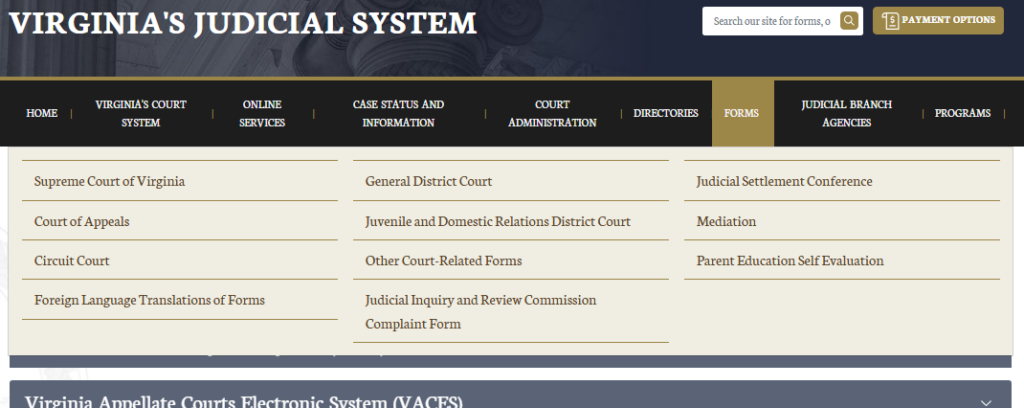
Chesapeake court forms are used in nearly every stage of a case. From starting a claim to responding to notices, each form carries specific legal data. Virginia courts rely on these forms to keep submissions uniform, which reduces confusion during review. They also support clerks and judges by grouping key details in a clear layout. As a result, filing documents becomes easier to review and store in court systems.
Purpose of Court Forms in Virginia Filings
Court forms in Virginia filings serve as the main method for submitting legal information to the court. Each form follows a fixed structure, so case details stay consistent across different filings.
These forms support different legal needs, such as:
- Civil claims and small disputes
- Criminal case paperwork
- Traffic violation responses
- Family law requests
- Motion filings and court notices
Each type of form works as a legal template that collects specific case data. For example, a motion form records requests made to the court, while a complaint form starts a civil case.
Types of Court Forms Used in Chesapeake Courts
Chesapeake court forms are structured legal documents used for filing cases, responses, and official requests in local courts. These forms support civil, criminal, traffic, and family-related legal actions across Chesapeake courts. Different types of legal applications exist based on case type. Each form supports court paperwork for the VA Chesapeake for accurate filing documents and legal submissions. Court paperwork, VA Chesapeake follows specific formatting rules for case processing. Users rely on structured forms to present court applications clearly for review and recordkeeping.
Civil Court Forms
Civil court forms support non-criminal disputes between parties in Chesapeake courts. These legal applications often relate to money claims, property issues, and contract disagreements. Civil filings include lawsuits, small claims requests, and motion submissions. These documents help courts process filing documents linked to private disputes.
Typical civil Chesapeake court forms include:
- Small claims complaint forms
- Civil lawsuit initiation papers
- Motion to dismiss filings
- Response and counterclaim forms
- Subpoena requests for witnesses
Civil legal submissions often require clear facts, damages claimed, and party details. Court clerks use these court applications to assign case numbers and schedule hearings.
Criminal Court Forms
Criminal court forms relate to offenses handled by the Chesapeake judicial system. These forms support law enforcement actions and court procedures tied to criminal charges. Criminal legal applications include warrants, affidavits, and case-filing documents. Prosecutors and law enforcement agencies use these records for official submissions.
Criminal Chesapeake court forms include:
- Arrest warrant requests
- Search warrant affidavits
- Criminal complaint filings
- Bail and bond documentation
- Case initiation reports
These filing documents record charges, evidence summaries, and suspect details. Court applications in criminal matters support case tracking from arrest to final judgment.
Traffic Court Forms
Traffic court forms handle violations related to driving laws in Chesapeake. These legal applications cover tickets, citations, and response submissions. Drivers use court applications to respond to traffic tickets or request hearings. Filing documents helps courts process violations linked to road safety rules.
Traffic Chesapeake court forms include:
- Ticket response forms
- Citation contest requests
- Payment confirmation forms
- Driving violation notices
- Hearing request documents
These legal submissions allow individuals to either accept responsibility or contest violations. Filing documents also record driver information and incident details. Court paperwork, VA Chesapeake, for traffic matters supports organized handling of violation records and scheduling of court dates.
Family Court Forms
Family court forms address legal matters involving household relationships. These legal applications often involve custody, divorce, and financial support cases. Family-related filing documents play a major role in personal legal disputes. Courts rely on structured court applications for review and decision-making.
Family Chesapeake court forms include:
- Child custody petitions
- Divorce complaint filings
- Child support applications
- Visitation agreement forms
- Protective order requests
These legal submissions contain sensitive personal details and financial information. Filing documents helps courts assess family situations and issue rulings.
How to Access Chesapeake Court Forms Online
Chesapeake court forms are available through official digital portals managed by the clerk’s office. Users can obtain digital court forms through secure e-filing systems and document portals without visiting in person. These systems support fast retrieval of Chesapeake court forms for legal and administrative needs. Court users can find e-filing forms, civil filings, and case-related paperwork through structured online filing system pages. Most files are stored in PDF format for simple legal forms download and printing.
Official Sources and Clerk Office Portals
Official sources remain the primary place for obtaining Chesapeake court forms. The clerk’s office maintains updated digital court forms for civil, traffic, and family-related filings. These records are organized inside a document access portal linked with the court’s online filing system. Users typically start from the clerk’s office homepage and move through labeled sections such as “Forms,” “Records,” or “Filing Tools.” Each section contains structured categories that separate civil, criminal, and administrative paperwork.
Official sources include:
- Clerk’s office form repositories
- County court digital filing pages
- Public records form sections
- Case submission portals
These sources provide verified versions of legal forms and download files. Since updates occur regularly, outdated copies are removed from active listings. This reduces filing errors and supports consistent submission formatting across the court system.
E-Filing Forms, Download Process, and Navigation
The e-filing forms section allows users to prepare documents for electronic submission. These forms work within the online filing system and support structured submission workflows for attorneys and self-represented filers.
The digital court forms section typically follows a simple pattern:
| Step | Action |
|---|---|
| 1 | Choose the required document type |
| 2 | Select “Forms” or filing category |
| 3 | Choose required document type |
| 4 | Open PDF or fillable file |
| 5 | Save or print for submission |
Navigation across the document access portal often uses category menus and search filters. Users can sort forms by case type or filing purpose, which reduces time spent locating specific documents.
Steps: to Filing Court Forms
Filing Chesapeake court forms follows a structured legal submission process that helps the court record stay accurate and valid. Each step supports proper paperwork submission and reduces errors during filing documents. The process includes selecting the right forms, completing them correctly, attaching records, and confirming filing status. This section explains each stage in a simple, clear format so users can handle court applications with confidence and accuracy.
Identify Correct Form
The first stage in the filing procedure involves selecting the correct legal form for the case type. Chesapeake court systems use different forms for civil cases, traffic matters, family issues, and small claims filings. Using the wrong form can delay the paperwork submission or cause rejection at the clerk’s office.
Form sources include:
- Official court clerk website portalsTheThe
- Virginia judicial system forms libraries
- E-filing forms section for digital submissions
Before starting, users should match their case type with the correct document title. This step supports accurate filing documents and reduces correction requests from the court clerk.
Fill Required Information
After selecting the correct form, the next stage involves entering all required details with accuracy. Courts rely on complete data for proper record verification and case processing.
Typical information includes:
- Full legal name of parties involved
- Case number (if already assigned)
- Contact details and mailing address
- Case description or legal request type
All fields must be filled using clear and consistent data. Mistakes or missing entries can slow down the legal submission process and may require resubmission.
Attach Supporting Documents
Supporting documents play a key role in validating court applications. These records help the court confirm claims and verify case details during processing.
Attachments include:
- Identification documents
- Contracts or agreements
- Evidence files (photos, receipts, statements)
- Prior court orders, if applicable
All attachments should match the information provided in the form. Mismatched records can lead to delays in paperwork submission review.
Submit via Clerk or E-Filing
Once forms and attachments are complete, submission can be completed through two main channels: clerk office filing or electronic filing systems.
Submission options include:
| Method | Description |
|---|---|
| Clerk Office Submission | Physical delivery of printed forms at the courthouse |
| E-Filing System | Physical delivery of printed forms to the courthouse |
Clerk’s office filing works best for users who prefer in-person submission. E-filing forms offers faster processing and reduces manual handling.
Confirm Filing Status
After submission, checking filing status helps confirm that the court has received and recorded the documents correctly. This step supports document verification and prevents missing filings.
Status confirmation can be done through:
- Court clerk office inquiry
- Online case tracking portal
- Email or notification updates from e-filing systems
Users should keep a copy of all submitted paperwork for personal records. Confirmation receipts or case numbers act as proof of the completion of filing documents.
Common Mistakes When Submitting Court Forms
Court forms in Chesapeake often get rejected due to simple filing mistakes. Most issues come from missing details or incorrect filing steps in court paperwork and VA Chesapeake submissions. These legal filing errors can delay cases and require resubmission.
Filing mistakes and missing signatures
One of the most common rejected form issues comes from missing signatures or incorrect party details. Courts require every required signature field to be completed before acceptance. Filing mistakes also happen when forms are sent to the wrong court office. Each court handles specific case types, so incorrect selection leads to rejection.
Filing errors include:
- Missing required signatures
- Wrong court selection
- Incorrect case number entry
- Unreadable or incomplete fields
These documentation errors often result in processing delays. Small gaps in details can lead to the full rejection of legal paperwork.
Documentation errors and late filing issues
Incomplete paperwork is another frequent reason for rejected forms. Missing attachments or supporting documents often cause case delays. Court staff cannot process incomplete submissions under standard filing rules. Late submission also creates legal filing errors. Deadlines vary by case type, and missing them leads to automatic rejection or reset of filing dates.
| Issue Type | Result |
|---|---|
| Missing documents | Filing rejection |
| Late submission | Case delay or reset |
| Wrong form version | Resubmission required |
NLP-related issues like rejected forms, filing mistakes, and documentation errors appear often in court paperwork and VA Chesapeake cases. Careful review of each section before submission reduces delays and repeat filings.
E-Filing vs Paper Filing in Chesapeake Courts
E-filing in Chesapeake courts uses a digital filing system where legal form submission happens through an online court portal. Paper filing relies on the physical delivery of court applications at the clerk’s office counter. Both methods support court applications, but speed, accuracy, and workflow differ across electronic submission and in-person processing.
Online E-Filing System in Chesapeake Courts
The electronic submission method allows users to submit e-filing forms through a secure court portal usage system. Files move directly into case management systems without manual handling at the counter. This digital filing system supports faster processing and reduces repeated trips to the clerk’s office. It is commonly used for civil motions, routine filings, and the submission of standard legal forms.
Features of e-filing forms include:
- 24/7 submission window through the court portal usage system
- Digital file uploads in PDF or supported formats
- Automated time stamping for court applications
- Reduced paperwork errors through structured electronic submission fields
- Instant confirmation receipts for filing records
Speed is a major advantage here. Most filings enter review queues within minutes instead of physical intake delays. Accuracy improves since fields are standardized in the digital filing system, limiting missing data issues.
Paper Filing at Clerk’s Office Counter
Paper filing involves the submission of printed legal forms at the Chesapeake clerk’s office. Staff manually review, stamp, and log each court application into the system. This method remains used for documents requiring original signatures or certified copies. It also supports users who prefer physical submission over electronic submission.
Steps in paper filing:
- Print required court applications
- Complete forms by hand or in a typed format
- Submit at the clerk’s office counter
- Receive stamped copies as proof
Processing time is slower since each file moves through manual entry stages. Errors may occur if handwriting or formatting is unclear, which can delay case entry.
| Filing Method | Speed | Accuracy | Submission Type |
|---|---|---|---|
| E-Filing Forms | Fast processing | High due to digital fields | Electronic submission |
| Paper Filing | Slower workflow | Dependent on manual review | Physical submission |
E-filing forms remain preferred for routine court applications, while paper filing still serves specific documentation needs within Chesapeake courts.
(FAQs) About Chesapeake Court Forms
Quick answers help clarify common concerns about Chesapeake court forms and reduce confusion during filing. These questions reflect real searches about legal forms, VA, and routine court paperwork Chesapeake needs.
Where Chesapeake Court Forms Are Downloaded
Most Chesapeake court forms come from official Virginia court sources and clerk’s office pages. These platforms provide updated documents for civil, family, traffic, and small claims matters. Users should always confirm they are using the latest version before filing. Reliable sources usually include Virginia Judicial System portals and the Chesapeake clerk resources. Many forms are free to download in PDF format. Correct form selection helps avoid filing delays and rejected submissions.
Are Court Forms Free in Virginia?
Most standard legal forms VA are available at no cost through official court websites. These include common civil and family-related documents used in routine filings. Some copies, such as certified records or duplicate filings, may involve small fees. Fee rules depend on case type and court policy. Always check the specific form details before starting paperwork.
Can Court Forms Be Filed Online in Chesapeake?
Yes, certain case types allow electronic filing of Chesapeake court forms through approved court systems. This option is commonly used for civil and traffic-related matters. Online filing helps reduce in-person visits and speeds up submission processing. However, not all case categories support e-filing. Users should verify eligibility before submitting court paperwork to Chesapeake online.
What Happens If the Wrong Form Is Submitted?
Submitting the wrong court paperwork can delay the case process in Chesapeake. In most situations, the clerk’s office may reject the filing or request corrections. Users may need to resubmit the correct legal forms, the VA version with updated details. This can also affect deadlines if not corrected quickly. Careful form selection helps avoid repeated submissions and unnecessary delays.
How Long Does Processing Take for Chesapeake Court Forms
Processing time for Chesapeake court forms depends on the case type and court workload. Simple filings, such as traffic or basic civil documents, are often handled faster than complex family or dispute cases. In most situations, clerk review may take a few days, though busy periods can extend this timeline. Properly completed legal forms, VA usually moves through the system without delay, while incomplete court paperwork in Chesapeake may take longer due to corrections or resubmission requests. Timelines also vary based on whether the filing is submitted online or in person.