Chesapeake traffic court handles traffic tickets and violation cases issued in Chesapeake, Virginia. It manages hearings, fines, and official decisions tied to driving offenses and maintains case records for drivers and law enforcement review, and supports DMV reporting and record accuracy. It operates under Virginia traffic laws and processes both minor and serious driving violations. Cases are scheduled for court review where evidence and officer reports are evaluated. Outcomes are recorded in official legal and DMV systems for future reference.
Chesapeake traffic court plays a central role in processing traffic tickets that Chesapeake, VA, drivers receive for speeding, reckless driving, red light violations, and other traffic enforcement cases issued by police officers. The system records each case outcome and connects it with Virginia DMV penalties, which may include points on a license, increased insurance costs, or suspension. Court decisions are forwarded into the official traffic violations system, keeping driving records updated for enforcement, compliance tracking, and DMV reporting across Virginia.
What is Chesapeake Traffic Court?
Chesapeake Traffic Court is the local court in Chesapeake that handles traffic-related cases, including citations, violations, and related hearings. It operates within Virginia’s judicial structure and processes cases linked to road and driving laws. This court reviews traffic violations, hears driver cases, and applies Virginia traffic laws under the legal system of Virginia.
Purpose of Chesapeake Traffic Court
Chesapeake Traffic Court serves as the main violations court for traffic matters within the city limits. It handles court hearings where drivers respond to tickets issued by law enforcement. The core purpose is to review alleged violations of Virginia traffic rules and determine outcomes based on evidence. These hearings may involve fines, driving record points, or other penalties, depending on the case type.
Traffic violations processed include:
- Speeding tickets
- Reckless driving charges
- Running red lights or stop signs
- Driving without a valid license or registration
- Seatbelt and safety-related citations
The traffic violations process usually begins when a citation is issued. The case then moves to a scheduled hearing where a judge reviews the details presented by both sides. Decisions are based on Virginia traffic statutes and documented evidence from the incident.
Jurisdiction and Traffic Case Types in Chesapeake
Chesapeake Traffic Court holds jurisdiction over all traffic-related offenses that occur within Chesapeake city boundaries. It operates under Virginia’s General District Court structure, which handles misdemeanor-level traffic matters and civil traffic disputes. The Virginia traffic law system separates cases into different categories, and this court focuses mainly on non-criminal and misdemeanor traffic offenses. More serious cases may move to higher courts depending on severity.
Typical case types include:
- Moving violations such as speeding or improper lane changes
- Equipment violations like faulty lights or expired tags
- DUI-related preliminary hearings
- License suspension or reinstatement matters
- Hit-and-run or reckless driving incidents
Each case follows a structured hearing process where evidence, officer statements, and driver responses are reviewed. Outcomes may include fines, court costs, license points, or required driving programs.
Traffic Fines, DMV Penalties & Points System
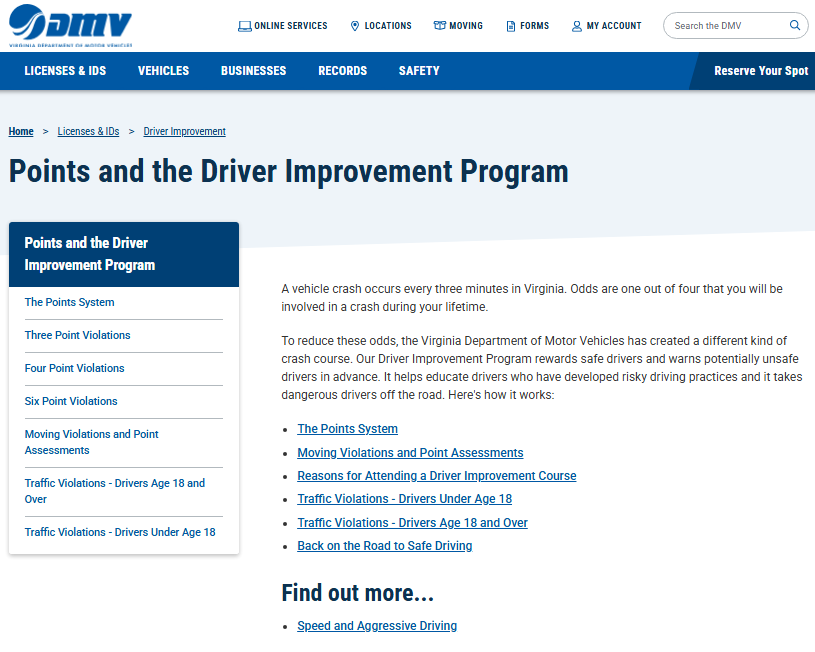
Traffic fines in Chesapeake are set under Virginia traffic law and depend on the type and severity of the violation. Along with fines, the Virginia DMV applies a points system that tracks driver behavior https://www.dmv.virginia.gov/licenses-ids/improvement/points and can lead to license suspension. The system combines traffic fines, DMV penalties in Virginia, and license points to control repeat violations. Drivers may face higher costs, record impacts, and driving restrictions if violations continue.
Traffic Fines Structure in Chesapeake, VA
Traffic fines in Chesapeake vary based on offense type, https://www.dmv.virginia.gov/licenses-ids/improvement/points/points-3, court decision, and case details. Minor violations cost less, while serious offenses carry higher penalties.
Fine ranges include:
- Speeding (1–9 mph over limit): lower fine range
- Speeding (20+ mph over): higher fines plus court costs
- Red light violation: fixed penalty plus fees
- Reckless driving: heavy fines and possible jail exposure
- Seatbelt violation: smaller fine category
Extra costs often include:
- Court processing fees
- DMV administrative charges
- Driver improvement program fees
Fines do not work alone. They connect with the DMV penalty system, which tracks repeat violations through recorded points.
DMV Points System in Virginia
Virginia uses a license point system to record driving behavior https://www.dmv.virginia.gov/licenses-ids/improvement/points/points-4. Each traffic violation adds demerit points to the driver’s record.
Point values vary by offense:
| Violation Type | DMV Points |
|---|---|
| Speeding (minor) | 3 points |
| Reckless driving | 6 points |
| Improper passing | 4 points |
| Following too closely | 4 points |
| Failure to obey signals | 4 points |
Effects of points:
- Points stay on record for 2–11 years based on offense level
- Insurance rates often increase after point accumulation
- DMV may require driver improvement classes for high totals
The penalty system tracks repeat violations closely. More points reflect higher risk behavior on the road.
License Suspension Rules & Penalty Triggers
License suspension in Virginia depends on the total points and the severity of the violation:https://www.dmv.virginia.gov/licenses-ids/improvement/points/points-6. The DMV reviews records when limits are reached.
Suspension triggers:
- 18 points in 12 months → suspension risk
- 24 points in 24 months → mandatory suspension review
- Serious offenses like DUI or reckless driving → immediate action possible
Suspension effects include:
- Temporary loss of driving rights
- Required reinstatement fees
- Possible completion of safety courses
- Extended monitoring after reinstatement
The system links fines, DMV penalties in Virginia, and point totals together. Each violation adds pressure on driving status and long-term record impact.
Common Traffic Violations in Chesapeake
Traffic violations in Chesapeake, VA, include speeding tickets, red light infractions, and reckless driving cases. These traffic citations are processed through local traffic court and carry different penalties based on severity and driving history. Drivers in Chesapeake often receive driving offenses linked to everyday road behavior. Many violations fall under standard traffic citations, while others rise to serious reckless driving charges. Law enforcement tracks these offenses closely, especially in high-traffic zones and school areas.
Driving behavior that leads to violations includes:
- Exceeding posted speed limits
- Ignoring traffic signals
- Failure to stop at intersections
- Distracted driving during travel
Speed enforcement areas and busy intersections show higher rates of tickets. As a result, many drivers face fines, court appearances, and points added to their driving record.
Speeding and Reckless Driving Cases
Speeding remains one of the most reported driving offenses in Chesapeake. Law officers issue speeding tickets in Chesapeake, VA, when drivers exceed posted limits, even by small margins, in monitored zones. Reckless driving cases carry more serious penalties. This charge often applies when speed or behavior shows disregard for road safety laws.
Examples include:
- Driving 20+ mph over the speed limit
- Aggressive lane changes at high speed
- Racing or unsafe passing on highways
In Virginia law, reckless driving can escalate from a simple traffic citation to a criminal charge depending on the conditions. Penalties may include higher fines and license consequences.
Signal, Stop Sign, and Distracted Driving Offenses
Traffic signals and stop signs play a key role in road safety compliance. Violations in these areas remain frequent across Chesapeake intersections.
Traffic violations include:
- Running red lights at busy crossings
- Rolling stops at stop signs
- Distracted driving using mobile phones
These offenses often lead to traffic citations even without accidents. Law enforcement treats signal violations seriously due to crash risks at intersections.
Common violation types and impact:
| Violation Type | Risk Level | Common Outcome |
|---|---|---|
| Red light violations | High | Fines + points on record |
| Stop sign violations | Medium | Court citation |
| Distracted driving | High | Fines and penalties |
Distracted driving remains a growing concern in Chesapeake traffic enforcement reports. Even brief attention loss can lead to citations and increased insurance costs for drivers.
What Happens After You Get a Traffic Ticket?
A traffic ticket in Chesapeake, VA, starts a formal citation process that records the violation and sets the next steps for the driver. The driver may receive a court summons or instructions for payment, depending on the offense. After this point, the case moves through assigned court dates, possible hearings, or fine payment options based on the traffic violation details.
Ticket Issuance and Citation Process
A traffic officer issues traffic tickets in Chesapeake, VA, during or after a stop for a driving offense. This ticket acts as an official record of the violation and starts the citation process.
The citation usually includes key details such as:
- Driver information and vehicle details
- Type of violation, such as speeding or reckless driving
- Date, time, and location of the incident
- Assigned case or reference number
- Instructions related to court summons or payment
In many cases, the officer also explains the violation at the scene. The driver receives a physical copy of the ticket. That document works as the first notice of legal action tied to the offense.
Court Date Assignment and Hearing Notice
Most traffic tickets include a court date assignment printed directly on the citation. This date sets when the driver must appear in Chesapeake traffic court if the case requires a hearing. A hearing notice may also be mailed to confirm the schedule or provide extra instructions. The notice outlines the location, time, and case details.
Missing the assigned date can lead to:
- Additional penalties
- Suspension of driving privileges
- A warrant for failure to appear
Minor violations sometimes allow payment without a court appearance. More serious offenses, such as reckless driving, often require a formal hearing before a judge.
Payment Options and Court Appearance Requirement
After receiving a ticket, the driver may choose between paying the fine or appearing in court, depending on the violation type.
Payment options include:
| Option | Description |
|---|---|
| Online payment | Send payment using the instructions on citation |
| Mail payment | Request a hearing before a judge |
| In-person payment | Pay at the court clerk’s office |
| Court appearance | Send payment using the instructions on the citation |
Some traffic tickets in Chesapeake, VA, allow full payment without court involvement. This usually applies to minor infractions.
Chesapeake Traffic Court Hearings
Traffic court hearings in Chesapeake Traffic Court handle traffic citations where a judge reviews the case and issues a final decision. These court hearings decide outcomes such as fines, dismissals, or added penalties based on the evidence and statements.
What Happens Inside Chesapeake Traffic Court Hearings
A court process in Chesapeake traffic court starts when the case is called before a judge. The defendant stands before the judge, and the citation details are reviewed on record. The officer who issued the ticket may present facts about the violation. The driver can respond and explain their side. This stage forms the base of the judge’s decision.
Steps inside the hearing include:
- Case called by the clerk
- Judge reviews citation details
- Officer statement or report review
- Driver statement recorded
- Judge decision announced
Court hearings follow a structured flow that keeps each case clear and organized. The judge checks facts such as speed, location, and violation type. Statements from both sides help shape the outcome.
A hearing can result in:
| Outcome Type | Meaning |
|---|---|
| Fine imposed | Monetary penalty set by the court |
| Case dismissal | Monetary penalty set by the court |
| Points added | DMV record updated |
| Deferred ruling | Judge delays final decision |
The court process moves case by case. Each citation receives an individual review based on the presented facts and legal rules.
Plea Options and Evidence Review Process
Plea options play a major role in traffic court hearings. The driver can enter a guilty plea or a not guilty plea during the court process. A guilty plea means the driver accepts the violation. The judge may then impose fines or penalties immediately. Some cases may still include reduced penalties based on record history or circumstances. A not guilty plea leads to a full review of the evidence. The officer may present notes, radar readings, or witness statements. The driver may challenge these details or provide supporting facts.
Evidence review often includes:
- Ticket details and citation notes
- Officer testimony or written report
- Speed measurement tools or radar logs
- Driver explanation or defense statement
The judge’s decision depends on how strong the evidence appears on both sides. Some hearings end quickly, while others take longer if facts are disputed. The process stays focused on verifying what occurred at the time of the traffic stop.
Can You Fight a Traffic Ticket in Chesapeake?
Yes, a person can fight traffic tickets in Chesapeake, VA by contesting the charge in court. The process allows drivers to present facts, challenge evidence, and request ticket dismissal or a reduced penalty. Outcomes depend on evidence strength and the legal arguments used. Many cases do not end in automatic conviction. Courts review officer statements, driving records, and any supporting proof from the driver.
Contesting Traffic Tickets and Legal Defense Options
A traffic ticket can be challenged through several defense options depending on the situation. The driver may question how the citation was issued or whether the violation occurred as stated.
Legal defenses include:
- Radar or speed measurement issues
- Incorrect vehicle identification
- Faulty traffic stop procedure
- Lack of clear signage or road markings
- Emergency driving situation
Drivers may present documents, photos, or witness statements to support their position. In some cases, officers may not appear in court, which can affect the outcome.
Court Appearance and Traffic Ticket Appeal Process
Most traffic citations require a scheduled court appearance if the driver chooses to contest the charge. Missing the court date can lead to added penalties or license issues.
The process generally includes:
| Step | Action |
|---|---|
| 1 | Receive summons for court date |
| 2 | Prepare defense materials |
| 3 | Present the case before the judge |
| 4 | Receive decision |
In some cases, drivers may pursue a court appeal if the initial ruling is unfavorable. Appeals focus on legal errors or evidence misinterpretation rather than re-arguing the entire case.
(FAQs) About the Chesapeake Traffic Court
Quick Answer: Traffic tickets in Chesapeake, VA often raise questions about court appearances, fines, DMV points, and case outcomes. Most cases depend on the violation type and how Chesapeake traffic court handles the ticket process under Virginia law.
Do I have to appear in Chesapeake traffic court?
Court appearance depends on the type of violation written on the ticket, and not every traffic ticket in Chesapeake, VA requires a hearing. Minor offenses such as low-level speeding or equipment issues may allow payment without going to court. Serious violations usually require a judge’s appearance in Chesapeake traffic court, especially cases involving reckless driving or uninsured driving. If a driver ignores a required court date, the court can mark it as failure to appear, which may lead to license suspension and extra penalties.
How much is a speeding ticket in Chesapeake, VA?
Speeding ticket amounts in Chesapeake, VA, change based on how fast the driver was going over the limit. Lower speeds usually carry smaller fines, while higher speeds increase both fines and DMV points. In many cases, fines include court costs along with the base penalty. A small speeding ticket may lead to 3 DMV points, while higher-speed violations can reach up to 6 points. Insurance companies often adjust rates after a conviction is added to the record.
Can traffic tickets be dismissed in Chesapeake traffic court?
Some traffic tickets in Chesapeake, VA, cases may be reduced or dismissed, depending on the evidence and driving history. Judges in Chesapeake traffic court review each case separately and may consider mistakes on the ticket or clean driving records. Possible outcomes include reduced charges, traffic school options, or dismissal in specific situations. In some cases, negotiation with the prosecutor may lower penalties, especially for first-time or minor violations.
What happens if a court date is missed?
Missing a court date in Chesapeake traffic court can lead to serious consequences for any traffic ticket in Chesapeake, VA. The court may issue a failure to appear notice, which can trigger license suspension. Additional fines may be added, and in some situations, a warrant may be issued. To resolve the issue, the driver usually must contact the court and take steps to reopen or reschedule the case before further penalties increase.
How do traffic tickets affect DMV points and insurance in Chesapeake, VA?
Traffic tickets in Chesapeake, VA, often lead to DMV points being added to a driving record, and the total depends on the violation type. Lower violations usually add fewer points, while higher-speed or serious offenses add more points under Virginia traffic rules. Chesapeake traffic court convictions are shared with the DMV, which can affect insurance rates soon after the case closes. Insurance companies review driving records and may increase premiums after points appear. Over time, points may stay on the record for a set period, and repeated violations can create a stronger impact on both court fines and insurance costs. Safe driving after a ticket helps prevent further penalties and keeps the record more stable.