The Chesapeake Juvenile Court handles legal matters connected to minors, parents, and family-related disputes in Chesapeake, Virginia. The court hears cases involving child custody, visitation rights, juvenile offenses, child support, foster care matters, and domestic relations disputes. Many families use the court during legal conflicts that affect parental responsibility, child welfare, or household safety. The court reviews evidence, schedules hearings, and issues rulings that follow Virginia family law procedures. Residents often search for information about court records, custody hearings, filing steps, and family court procedures linked to the Chesapeake legal system.
The family court Chesapeake, VA system plays a central role in handling cases that involve children and family legal matters. Judges in this court review petitions, temporary custody requests, protective orders, juvenile delinquency cases, and support obligations between parents or guardians. Court decisions may affect visitation schedules, legal custody rights, financial support duties, and future family court proceedings. The court works separately from the Chesapeake General District Court and focuses on cases tied to juveniles and domestic relations matters. Many attorneys, parents, guardians, and social service agencies appear before the court during family law proceedings in Chesapeake, Virginia.
What Is the Chesapeake Juvenile Court?
The juvenile court Chesapeake, VA residents use for youth and family-related cases is the Chesapeake Juvenile & Domestic Relations Court. This court hears cases involving minors, family disputes, domestic matters, custody issues, child support, and certain criminal offenses involving juveniles. The court focuses on cases that involve children, parents, guardians, and household relationships. Its main goal is to address legal problems connected to families and youth court matters in a structured setting. Unlike the Circuit Court, this court handles many cases before they move to higher courts.
Chesapeake Juvenile & Domestic Relations Court Purpose
The Chesapeake Juvenile & Domestic Relations Court handles cases connected to minors and family relationships. The court handles both civil and criminal matters involving juveniles or domestic situations.
Cases heard in this court include:
- Juvenile offenses
- Child custody disputes
- Child visitation cases
- Child support matters
- Domestic violence protective orders
- Family abuse complaints
- Truancy and school-related cases
- Cases involving abused or neglected children
The court often focuses on rehabilitation for minors instead of punishment alone. Judges may order counseling, probation, treatment programs, or community service for certain youth cases.
What Authority Does the Juvenile Court Have?
This court has legal authority over many family and juvenile matters in Chesapeake, Virginia. It can issue court orders, approve custody arrangements, decide support payments, and hear cases involving minors accused of offenses.
The court may hear cases involving:
| Case Type | Court Authority |
|---|---|
| Juvenile crimes | Handles offenses committed by minors |
| Custody disputes | Decides parental custody rights |
| Child support | Sets or modifies support payments |
| Protective orders | Issues family abuse protections |
| Foster care matters | Reviews child welfare situations |
In some serious juvenile offenses, the court may transfer a case to the Circuit Court for further action.
Difference Between Juvenile Court and General District Court
Many people confuse the juvenile court with the General District Court. The difference mainly lies in the types of cases each court hears.
The Chesapeake Juvenile & Domestic Relations Court handles:
- Family disputes
- Domestic matters
- Cases involving minors
- Youth court proceedings
The General District Court handles:
- Adult traffic violations
- Small claims
- Adult criminal misdemeanors
- Civil disputes involving money claims
The Circuit Court handles major felony cases, jury trials, and appeals from lower courts. This separation helps each court focus on a specific area of Virginia law.
How to Search Chesapeake Juvenile Court Cases
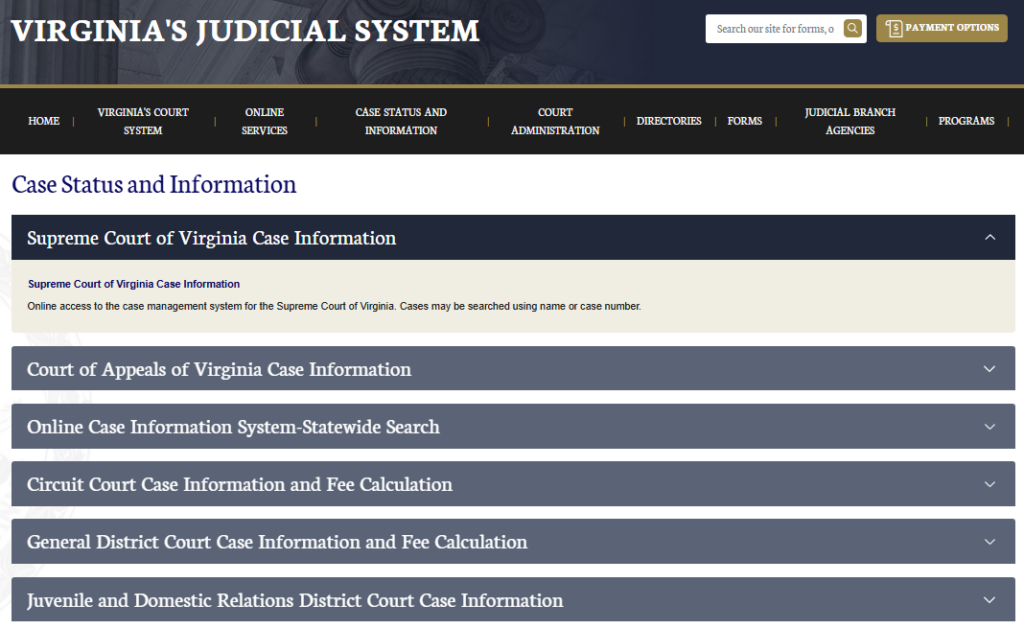
A Chesapeake juvenile case search usually starts through official court record systems or by contacting the local juvenile court clerk. Still, many juvenile and family court records in Chesapeake remain https://www.courts.state.va.us/caseinfo/home restricted due to privacy laws that protect minors and family matters. The Chesapeake Juvenile and Domestic Relations District Court handles cases involving minors, custody disputes, child support, abuse matters, and family-related hearings. People searching for family court records in Chesapeake often expect full online records, yet juvenile court files follow stricter privacy rules than standard civil or criminal cases.
Official Chesapeake Juvenile Case Search Methods
Most court searches begin with official Virginia court resources or direct court inquiries. Public users may view limited court records, hearing dates, or basic docket information for approved cases.
Search methods include:
- Online Case Lookup Systems
- Virginia court portals may show limited case status details
- Users can search by:
- Case number
- Party name
- Hearing date
- Some juvenile matters may not appear online
- Court Clerk Requests
- The clerk’s office may provide limited file details
- Requesters often need:
- Valid identification
- Exact case details
- Relationship to the case
- In-Person Record Searches
- Certain records can only be reviewed at the courthouse
- Court staff may explain available public files and sealed records
Many people search for:
- Chesapeake juvenile case search
- juvenile docket lookup
- child custody court records
- hearing schedules
- family case status
- juvenile court hearing dates
Juvenile Confidentiality Rules and Public Record Limits
Virginia law protects juvenile court files to protect minors and family privacy. As a result, many records remain sealed from the public.
Restricted records may include:
- Juvenile criminal complaints
- Adoption files
- Child abuse investigations
- Foster care records
- Custody evaluations
- Mental health reports
Parents, attorneys, law enforcement agencies, and approved parties often receive broader record visibility. Public users usually see limited case lookup data or hearing schedules.
Cases Handled in Chesapeake Family Court
The Chesapeake Juvenile and Domestic Relations District Court hears many family-related and juvenile cases. People visit this court for child custody disputes, child support matters, visitation rights, guardianship requests, protective orders, and juvenile delinquency hearings. Family court Chesapeake, VA cases often involve parents, guardians, or family members seeking legal decisions that affect children and household safety. The court reviews evidence, listens to both sides, and issues orders that support lawful parenting arrangements and family stability.
Child Custody Cases
Child custody cases are one of the most common domestic cases handled in custody court. Parents usually file these cases after separation, divorce, or family disputes involving children.
The court reviews several factors before making a decision, including:
- The child’s daily needs
- Each parent’s living situation
- School and medical care
- Emotional bonds with parents
- Safety concerns inside the home
Judges may award:
| Custody Type | Meaning |
|---|---|
| Legal Custody | Authority to make major decisions for the child |
| Physical Custody | Determines where the child lives |
| Joint Custody | Parents share responsibilities |
| Sole Custody | One parent receives primary authority |
Many hearings focus on parenting arrangements that support the child’s routine and well-being.
Child Support Matters
Child support hearings help determine financial support for a child’s care. The court calculates payments using Virginia child support rules, parent income, healthcare costs, daycare expenses, and custody schedules.
Parents often visit the family court in Chesapeake, VA for:
- New child support orders
- Payment changes after income loss
- Enforcement of unpaid support
- Medical support disputes
The court may review pay records, tax forms, and custody details before issuing an order. Judges can modify support amounts if financial conditions change over time.
Visitation Disputes and Protective Orders
Visitation rights cases deal with parent-child contact schedules. Some disputes involve missed visits, holiday schedules, transportation concerns, or supervised visitation requests.
The court may create orders covering:
- Weekend visitation
- Summer schedules
- Holiday parenting time
- Supervised visits
- Communication between parents
Protective orders are another major part of domestic hearings. A person may request protection after threats, abuse, stalking, or violent behavior inside a household relationship. Judges can issue temporary or long-term orders that limit contact and improve safety for family members.
Guardianship Proceedings and Juvenile Delinquency Cases
Guardianship proceedings allow a relative or responsible adult to request legal guardianship of a child. These cases often appear after parental illness, absence, substance abuse issues, or unsafe living conditions.
The court reviews:
- The child’s current care situation
- The proposed guardian’s background
- School and healthcare needs
- Long-term stability for the child
Juvenile delinquency cases involve minors accused of breaking the law. These hearings may include theft, assault, vandalism, truancy, or drug-related offenses. The court often focuses on rehabilitation, counseling, probation, community programs, and future behavior improvement rather than punishment alone.
Chesapeake Child Custody Court Process
The Chesapeake child custody court process usually begins when a parent files a custody petition in the juvenile and domestic relations court. The court then reviews parenting plans, visitation schedules, family mediation efforts, and evidence from both parents before making a custody decision based on the child’s best interests. Parents involved in a custody court case in Chesapeake often face several legal steps before the court issues a final order. Each stage focuses on the child’s safety, stability, education, health, and daily care. A judge may review school records, communication history, medical records, and testimony from both parents during custody hearings.
Filing a Child Custody Petition in Chesapeake
A parent starts the process by filing a petition with the juvenile court. The filing may request:
- Physical custody
- Legal custody
- Joint custody
- Visitation rights
- Emergency custody orders
The court clerk usually assigns a hearing date after the paperwork is filed. The other parent then receives legal notice of the case.
| Parenting Plan Details | Purpose |
|---|---|
| Weekly schedules | Shows where the child stays |
| Holiday arrangements | Prevents future disputes |
| School transportation | Explains pickup responsibilities |
| Medical decisions | Identifies decision-making authority |
| Communication rules | Sets contact expectations |
Clear parenting schedules often help reduce conflict between parents during custody hearings.
Custody Hearings and Family Mediation
The court may direct parents to attend family mediation before a judge hears the full case. Mediation gives parents a chance to resolve disputes outside the courtroom. A mediator does not decide the case but helps both sides discuss visitation schedules, school choices, and co-parenting concerns.
If mediation does not resolve the dispute, the judge schedules a formal hearing. During custody hearings, the court may examine:
- Parenting involvement
- Living conditions
- Financial stability
- Childcare history
- Domestic violence claims
- The child’s relationship with each parent
Virginia courts focus heavily on the “best interests of the child” standard. Judges often look for consistency, safe housing, emotional support, and active parenting.
Custody Modification and Court Decisions
A custody order does not always stay permanent. Parents may request a custody modification if major life changes affect the child’s routine or safety. Common reasons include:
- Relocation to another city or state
- Changes in employment schedules
- School or medical concerns
- Violations of visitation orders
- Evidence of unsafe conditions
The parent requesting a modification must show a significant change in circumstances. The court then reviews whether the requested change benefits the child.
Juvenile Cases and Youth Court Proceedings
The Chesapeake Juvenile and Domestic Relations District Court handles cases involving minors, including juvenile delinquency, custody matters, and youth hearings. The court focuses on accountability, rehabilitation, and supervision rather than long-term punishment for most juvenile offenses. Youth court proceedings in Chesapeake often involve early intervention programs, probation services, and court-ordered counseling. Judges review each case carefully and consider the child’s age, school history, family situation, and prior behavior before making decisions.
Common Juvenile Offenses in Chesapeake
Juvenile court Chesapeake cases often involve non-violent offenses committed by minors under age 18. Some youth cases involve first-time mistakes, though repeat offenses can lead to stricter supervision.
Juvenile offenses include:
- Theft or shoplifting
- School fights or assault
- Vandalism and property damage
- Drug or alcohol possession
- Truancy and curfew violations
- Traffic offenses involving minors
Many youth court cases begin after police referrals, school reports, or complaints from parents or guardians. After a referral, intake officers review the case and decide the next step.
| Juvenile Court Stage | Purpose |
|---|---|
| Intake Hearing | Reviews the complaint and possible court action |
| Detention Hearing | Decides if the minor stays in custody |
| Adjudication Hearing | Similar to a trial in juvenile court |
| Disposition Hearing | Determines probation, counseling, or placement |
Delinquency Process and Intake Hearings
The delinquency process often starts with an intake hearing. During this step, court staff examine police reports, school records, and family concerns. Some cases move forward to formal youth hearings, though minor offenses may qualify for diversion programs.
Diversion programs help young offenders avoid deeper court involvement. These programs may include:
- Community service
- Counseling sessions
- Anger management classes
- School attendance monitoring
- Drug education programs
This rehabilitation focus aims to reduce repeat juvenile delinquency cases. Courts often work with parents, probation officers, schools, and social service agencies during supervision.
Probation, Supervision, and Rehabilitation
Probation remains one of the most common outcomes in youth court proceedings. Juveniles placed on probation must follow court rules, attend school regularly, and meet with supervision officers. Rehabilitation programs often focus on behavior improvement and personal responsibility. Many Chesapeake juvenile court cases involve counseling, mentoring, mental health treatment, or substance abuse support. These programs help minors build better decision-making habits and reduce future juvenile offenses.
Guardianship and Domestic Relations Cases
The Chesapeake juvenile court handles many family law matters that involve child welfare, legal guardianship, and domestic petitions. These cases often focus on caretaker rights, family stability, and the safety of minors. A guardianship court case allows a trusted adult to request legal authority over a child when parents cannot provide proper care. A domestic relations court matter may involve custody disputes, visitation, support requests, or other family petitions connected to minors.
Guardianship Petitions and Caretaker Rights
A guardianship petition asks the court to appoint a person to care for a child. Courts review the child’s living conditions, financial support, school records, and family background before making a decision. Judges place strong attention on the child’s safety and long-term well-being.
Reasons for legal guardianship include:
- Parent illness or absence
- Unsafe home conditions
- Substance abuse concerns
- Death of a parent
- Temporary family hardship
A guardian may receive rights connected to:
| Guardianship Rights | Purpose |
|---|---|
| Medical decisions | Approve healthcare treatment |
| School enrollment | Manage education records |
| Daily care authority | Handle housing and supervision |
| Financial support | Apply for benefits for the child |
Courts often request documents, witness statements, and proof showing why the guardianship serves the child’s best interest. Family members, grandparents, or close caretakers frequently file these petitions.
Domestic Relations Court and Family Petitions
The domestic relations court reviews legal matters involving parents, guardians, and children. These cases may involve custody schedules, visitation rights, child support, or protective orders linked to family disputes.
Family petitions often include:
- Child custody requests
- Visitation modifications
- Child support enforcement
- Protective or restraining orders
- Paternity-related matters
Judges review evidence from both parties before issuing court orders. Many hearings include reports from social workers, school staff, or child welfare agencies. The court aims to create a stable environment for the child and reduce family conflict where possible.
Chesapeake Juvenile Court Location and Contact Information
The Chesapeake Juvenile Court is located at the city’s main courthouse facility, where the clerk’s office handles filings, records, and case-related requests. The Chesapeake family court phone number is listed through the courthouse clerk’s office for direct assistance with juvenile and domestic relations matters.
Courthouse Location and Clerk’s Office Details
The Chesapeake juvenile court address is commonly associated with the city’s judicial complex, where multiple district courts operate from one location. This courthouse location serves as the central filing office for juvenile, custody, and family-related cases.
Primary location details:
- Address: 307 Albemarle Dr, Chesapeake, VA 23322
- Office type: Clerk’s office and court administration center
- Function: Case filings, hearings, and records processing
- Court type: Juvenile and Domestic Relations District Court
Court administration staff handle intake for petitions, custody matters, and juvenile filings at the clerk’s office counter.
Chesapeake Juvenile Court Contact Details
The Chesapeake family court phone number is managed through the clerk’s office at the courthouse. Calls are routed to court administration staff for juvenile, custody, and domestic relations matters.
Contact information:
- Filing office: Juvenile and Domestic Relations District Court clerk counter
- Phone (Clerk Office): (757) 382-8100
- Fax: (757) 382-8152
- Office hours: 8:00 AM – 4:00 PM, Monday to Friday
(FAQs) About the Chesapeake Juvenile
Chesapeake juvenile court handles cases involving minors, family disputes, custody issues, and protection matters under Virginia law. It also reviews confidential juvenile records, custody disputes, visitation matters, and other family-related court hearings that affect children and parents.
Juvenile Court Cases and Records in Chesapeake?
Chesapeake juvenile court deals with matters involving minors such as delinquency, truancy, child protection, and family conflict cases. These cases often involve sensitive juvenile records that remain private under Virginia rules, with limited viewing rights for parents, attorneys, and authorized agencies. The court also handles support issues and supervision-related matters for minors. Hearings usually follow a structured process that begins with filing a petition and moves toward a judge-led review of facts and evidence. After reviewing testimony and reports, the court issues a final order based on the child’s welfare and legal requirements.
Custody, Visitation, and Family Court Process?
Chesapeake family court handles custody disputes, visitation schedules, and guardianship matters focused on a child’s best interests. Judges review parenting roles, living conditions, education needs, and safety factors during custody hearings. Visitation hearings set structured parenting time for non-custodial parents, depending on family circumstances. Family mediation may also be used to reduce conflict and help both sides reach an agreement before or during court sessions. Custody case timelines vary, ranging from a few weeks for simple agreements to several months for disputed matters, especially when multiple hearings or evaluations are required.
Are Juvenile Records Public in Virginia?
Juvenile records in Virginia are generally not open to the public and remain confidential under state law. Only specific parties such as parents, guardians, attorneys, and court-approved agencies can review full case details. This privacy rule protects minors involved in court matters and limits the exposure of sensitive information. In some situations, parts of a case may become available after legal review or when a minor becomes an adult. Still, most juvenile records stay sealed to protect long-term privacy.
How Do Custody Hearings Work?
Custody hearings in Chesapeake juvenile court focus on deciding where a child will live and who will make important decisions. Judges review evidence, listen to both parents, and consider the child’s best interests. These hearings often include details about schooling, safety, home environment, and parental involvement. Witness statements, reports, and prior agreements may also be reviewed. After evaluating all facts, the court issues a custody order that both parties must follow.
Can Juvenile Court Records Be Found Online?
Some basic case information may be available online through Virginia court systems, but full juvenile records are not publicly posted. Online systems usually show limited details such as case status or hearing dates. Sensitive information remains restricted to protect minors and their families. Authorized users may need to visit the courthouse or request records through official channels for more detailed information. Access rules depend on case type and court approval.