Chesapeake public records search online provides a structured way to review official information tied to court cases, property filings, and civic documents in Chesapeake, Virginia. This section focuses on Chesapeake public records, helping users find organized data such as civil filings, criminal case listings, court dockets, and recorded property details. It reflects how local record systems categorize information for faster reference across multiple public record types.
Public records in VA Chesapeake are maintained through Virginia’s open records framework, including the Virginia Freedom of Information Act and local offices such as the Chesapeake Clerk of Court. These systems organize case files, land records, marriage records, and archived filings under standardized record-keeping rules. As a result, court documentation, docket summaries, and property histories remain structured within state and local databases for consistent public record reporting.
What Are Chesapeake Public Records?
Chesapeake public records are official documents and civic records created or held by local government offices in Chesapeake, Virginia. These records reflect government activity, decisions, and public service operations. They include public records from the VA Chesapeake, which show how civic systems function and how public funds and services are managed.
What Public Records Mean in Chesapeake
Public records refer to recorded government data created during official work. These records support transparent data across city departments and agencies. In Chesapeake, these records often come from courts, city offices, law enforcement units, and administrative departments. They reflect daily civic operations and public decisions.
Types include:
- Court filings and case files
- Property and land documents
- Police reports and incident logs
- Marriage and vital records
- City meeting minutes and resolutions
- Budget and spending reports
These government records support accountability and public review of civic actions. They also help residents stay informed about city operations.
A simple breakdown appears below:
| Record Type | Example Content | Source Office |
|---|---|---|
| Court files | Civil and criminal cases | Chesapeake courts |
| Property data | Deeds, ownership history | City assessor office |
| Police logs | Incident summaries | Police department |
| Civic records | Meeting notes, policies | City council |
These official documents form a structured system of public information.
Why Chesapeake Public Records Stay Open to Public Review
Public records remain available because they belong to the public. Government agencies maintain them as part of civic responsibility and transparency data practices. Virginia’s open records law plays a key role here. The Virginia Freedom of Information Act (FOIA) sets rules for how government data is handled and shared.
Points of Virginia FOIA:
- Public agencies must provide non-restricted civic records on request
- Most government data is open unless protected by law
- Some files stay private for safety, privacy, or legal reasons
- Requests can be submitted to state or local offices
This legal structure supports accountability in Chesapeake government operations. It also helps residents review official documents tied to public services, spending, and local decisions.
Types of Public Records Available in Chesapeake
Chesapeake public records include many civic records maintained by courts, police departments, and local offices. These records support transparency data and help with a government records search for legal, property, and administrative information. They reflect official activities such as court cases, arrests, land ownership, and business registrations. Each category forms part of the city’s documented public information system.
Court records
Court-related public records in Chesapeake include civil, criminal, and traffic case files handled through local courts. These records show filings, case numbers, hearing dates, and final judgments tied to legal matters. They help people track case progress and verify official court actions.
Arrest and criminal records
Arrest and criminal records come from law enforcement records created during police activity. These Chesapeake public records include arrest details, charges, booking information, and custody status linked to individuals involved in incidents. They are often used for background checks and case verification.
Property records
Property ownership data in Chesapeake public records includes land parcels, deed transfers, tax assessments, and ownership history. These records show who owns a property and how ownership has changed over time. Government records search tools often rely on this data for real estate verification.
Marriage & divorce records
Marriage and divorce records document legal status changes recorded by the court system. These Chesapeake public records include marriage licenses, divorce decrees, and filing details that confirm relationship status updates. They are commonly used for legal verification and identity confirmation.
Business licenses
Business license records show registered commercial activity within Chesapeake. These civic records include business names, registration dates, ownership details, and license status issued by local authorities. They help confirm whether a business is active and properly registered.
Police reports
Police reports are law enforcement records created after incidents or investigations. These Chesapeake public records include accident details, incident summaries, report numbers, and officer notes recorded at the scene. They are often used for insurance claims and legal documentation.
How to Search Chesapeake Public Records Online
Chesapeake public records can be found through official government systems that store case files, property data, and other official documents. A structured search helps retrieve accurate transparency data without confusion. A government records search in Chesapeake, VA, works by selecting the correct record type, entering accurate details, and reviewing results from official databases.
Identify Record Type
The first step in any Chesapeake public records search online starts with selecting the correct category of information. Different records sit in different systems, so choosing the right one saves time.
Record types include:
- Court case files (civil, criminal, traffic)
- Property and land records
- Marriage and divorce filings
- Business registrations
- Police incident reports
- Tax-related documents
Each category contains structured official documents stored under Chesapeake’s public records system. For example, court records often require a case number, while property records rely on parcel or address data.
Search Chesapeake Court Records Online in Virginia
The Virginia General District Court Online Case Information https://eapps.courts.state.va.us/gdcourts/landing.do System provides public court record lookup tools for cases filed across Virginia. Users can retrieve available court information by selecting a court location, choosing a case category, and using one of several search methods available through the system.
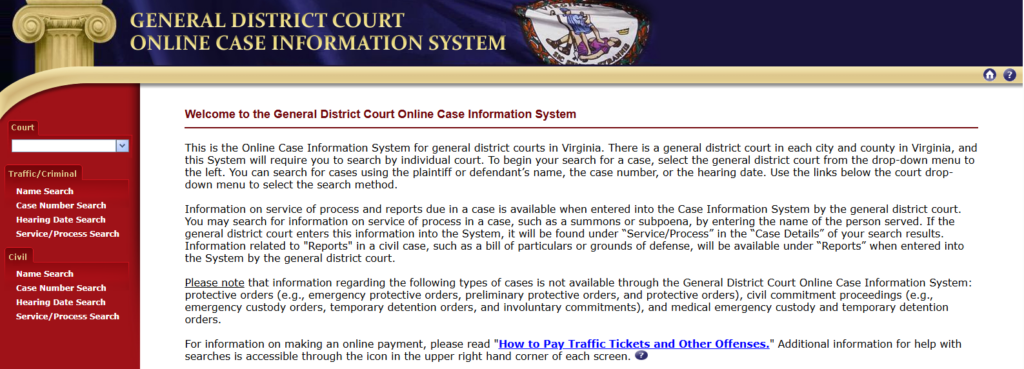
After opening the system, users can complete a Chesapeake public records search by following these steps:
- Locate the “Court” dropdown menu displayed on the left side of the page.
- Select the Virginia General District Court connected to the city or county where the case was filed.
- Review the available court categories shown in the sidebar, including:
- Traffic/Criminal
- Civil
- Select the category that matches the type of official documents being searched.
- Choose one of the available search methods:
- Name Search
- Case Number Search
- Hearing Date Search
- Service/Process Search
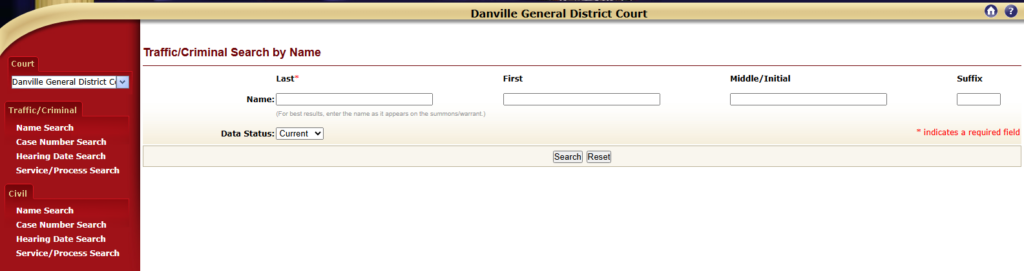
- Enter the required search details into the selected form.
- Submit the request to retrieve available court case information.
- Review the displayed case data, which may include:
- Hearing dates
- Filing information
- Case status
- Charges
- Related court records
This online lookup system supports transparent data by allowing public review of many district court records without visiting the courthouse in person. Accurate spelling, case numbers, and filing details often improve search results during a government records search in Chesapeake, VA.
Enter Search Details in the System
Once the portal is selected, the search process begins. Most Chesapeake public records databases use a simple search interface with labeled fields.
Input fields:
| Field Type | Example Input | Purpose |
|---|---|---|
| Name | John Smith | Person-based records lookup |
| Case Number | CR2025-001234 | Court file retrieval |
| Address | 123 Main St, Chesapeake | Property or land data search |
| Date Range | 2020–2024 | Filters older or recent records |
After entering details, the system matches entries within government records search Chesapeake, VA databases. Results may show multiple entries depending on name or address frequency.
Review Search Results Carefully
Search results usually display a list of matching records. Each entry contains basic details such as case title, filing date, and document type.
Users should check:
- Correct spelling of names
- Matching case numbers
- Date consistency
- Document category
Some records are public summary entries, while others show limited transparency data. Sensitive or sealed official documents may show restricted views.
Request Full Documents if Needed
Some Chesapeake public records are available only as summaries. Full copies require a formal request through the issuing department.
Request methods include:
- Online request forms through the city or court portals
- Email submission to the records office
- In-person filing at clerk offices
- Mail-in document requests
Typical processing details:
| Request Type | Processing Time Range | Notes |
|---|---|---|
| Court records | 1–5 business days | May include copy fees |
| Property records | Same day–3 days | Depends on system load |
| Certified copies | 3–10 days | Requires verification steps |
Fees may apply for printed or certified official documents. Payment methods vary by department handling the record.
FOIA Requests in Chesapeake
FOIA requests in Chesapeake allow the public to request official documents, public reports, and other government records under Virginia’s open records law. The process supports government transparency by giving residents a legal way to review public information, except for records protected by law. The Virginia Freedom of Information Act, often called FOIA, promotes public awareness of government activity. Through FOIA requests, people can ask for records from city departments, law enforcement agencies, court offices, schools, and other public bodies in Chesapeake.
What Is a FOIA Request?
A FOIA request is a formal request for public records held by a government agency. Virginia’s open records law gives the public the right to inspect or request copies of many government files and transparency data.
Public agencies in Chesapeake often maintain records such as:
- Meeting minutes
- Budget reports
- Property records
- Police incident reports
- Permit records
- Email communications related to public business
- Public contracts
- Inspection reports
- Court-related administrative files
A person does not usually need to explain why the records are requested. The request only needs enough detail for the agency to locate the documents.
| FOIA Request Type | Example of Records |
|---|---|
| City Government Records | Budgets, council meeting notes |
| Property and Land Records | Zoning files, permits |
| Public Safety Records | Arrest logs, incident reports |
| School Records | Policy documents, board meeting records |
| Administrative Records | Public employee salary data |
These public files support transparency and help residents stay informed about local government actions.
What Records Are Exempt From FOIA?
Some records cannot be released under Virginia law. Agencies may deny part or all of a request if the records contain protected information.
Exemptions include:
- Active criminal investigation files
- Juvenile records
- Medical records
- Personal financial information
- Social Security numbers
- Certain legal communications
- Personnel records with private details
- Security-related government records
Agencies often remove confidential details before releasing documents. This process is called redaction.
How to File FOIA Requests in Chesapeake
A FOIA request may be submitted in writing by email, mail, online form, or hand delivery. Some agencies accept verbal requests, though written requests create a clear record of communication.
A strong request often includes:
- A clear description of the records
- Relevant dates or case numbers
- Department or office name
- Preferred delivery method
- Contact information
Example request topics may include:
- Police activity reports
- City spending records
- Permit applications
- Public meeting records
- Government correspondence
Short and direct requests often receive faster responses. Broad requests may take longer to process or cost more due to staff time and copying fees.
FOIA Response Time Expectations
Virginia law gives public agencies a limited time to respond to FOIA requests. In many cases, the agency must respond within five working days.
The response may include:
- Release of the requested records
- Partial release with redactions
- A denial citing legal exemptions
- A request for more time
- A notice that the records do not exist
Large or complicated requests may require extra processing time. Agencies may charge reasonable fees for copying, searching, or preparing records.
Where Chesapeake Public Records Are Stored
Chesapeake public records are stored across several local and state agencies, not in one single database. Court files, police reports, property records, and city documents often sit in separate systems, which can make record searches confusing for many users. Many people expect one website to contain every public file. Yet Chesapeake record storage works through a mix of government offices, court systems, law enforcement databases, and online portals. This fragmented setup creates a major user gap that many websites fail to explain clearly.
City Government Offices Holding Chesapeake Public Records
Many public records VA Chesapeake searches begin with city government departments. These offices keep administrative files, permits, tax records, zoning papers, meeting minutes, and land use documents.
Record-holding departments include:
- Chesapeake City Clerk’s Office
- Commissioner of the Revenue
- Treasurer’s Office
- Planning and Zoning Department
- Building Permit Office
- Public Works Department
Each office stores different file categories. A property permit search, for example, may require the Planning Department database instead of court records.
| Record Type | Main Storage Location |
|---|---|
| Property tax records | Treasurer or Revenue Office |
| Building permits | Planning and Zoning |
| Meeting minutes | City Clerk |
| Business licenses | Commissioner of the Revenue |
| Land development files | Public Works or Planning |
Court Clerk Systems and Judicial Databases
Court-related Chesapeake public records usually remain inside judicial databases managed by Virginia courts. These systems differ from city government portals.
The Chesapeake Circuit Court Clerk stores many legal documents, including:
- Civil case filings
- Criminal court records
- Probate records
- Marriage licenses
- Land records
- Judgment files
Virginia’s statewide court portals may display case summaries online. Full documents, though, often stay inside courthouse systems.
Police Department Databases and Incident Records
Police records often sit in separate law enforcement systems rather than city clerk databases. The Chesapeake Police Department manages accident reports, arrest logs, incident reports, and dispatch-related records. Many police files stay restricted under Virginia public record laws. Open investigations, victim information, and juvenile details may remain unavailable to the public.
Law enforcement databases may include:
- Arrest information
- Traffic collision reports
- Incident summaries
- Jail booking details
- Warrants and enforcement records
Some police reports require formal FOIA requests. Others may need identity verification before release.
Online Public Portals for Chesapeake Records
Several online systems now provide digital search tools for public records in the VA Chesapeake. Yet these portals rarely connect in one place. A person searching for property ownership may need one website. Court records may require another portal. Police files may involve a direct records request.
Common online public portals include:
- Virginia judicial case search systems
- Chesapeake property assessment databases
- GIS mapping systems
- Land record portals
- FOIA request platforms
This fragmented structure often slows searches and creates duplicate work for users. Many competitor pages skip this issue, even though it affects nearly every public record search in Chesapeake.
Fees, Processing Time & Access Limitations
Most Chesapeake public records are available at low cost, though some official documents require payment for copies or certified copies. Processing times vary by agency, and certain civic records remain restricted under state privacy laws. Public agencies in Chesapeake handle thousands of government records search requests each year. Many records can be viewed online for free, yet printed copies, certified records, and archived files often include service fees. Costs depend on the type of file, the number of pages, and the department handling the request.
Fee types include:
| Record Type | Typical Cost Range | Notes |
|---|---|---|
| Online record search | Free | Many databases allow free searches |
| Printed copies | Per page fee | Charges vary by office |
| Certified copies | Higher fee | Includes official seal or verification |
| Archived files | Extra retrieval fee | Older civic records may take longer |
| FOIA request copies | Varies by request size | Staff time may affect cost |
Many agencies provide free viewing of court indexes, property files, and public meeting records. Yet users often pay for physical copies of official documents requested through clerk offices or records divisions.
Processing Delays for Government Records Search Requests
Processing times depend on record type, staffing levels, and file storage methods. Digital records often arrive within days, though older paper files may take longer.
Several factors can delay a request:
- Large file requests
- Archived civic records
- Requests needing legal review
- Missing request details
- High public demand periods
Virginia public offices commonly respond to FOIA-related requests within a set legal timeframe. Some departments may request extra time if records require review or redaction. Short and detailed requests often move faster through the system.
FAQs About Chesapeake Public Records
Chesapeake public records include many government documents that residents, researchers, and businesses review through local and state agencies. Public records VA Chesapeake searches often include court files, property records, arrest reports, marriage records, tax data, and business filings.
Are Chesapeake Public Records Free?
Some Chesapeake public records are free to search online through government databases and courthouse systems. Property tax records, court calendars, inmate searches, and meeting minutes are often available without charge. Agencies may still charge fees for certified copies, printed pages, document retrieval, or staff research time connected to FOIA requests. Costs usually depend on the number of pages requested and the amount of work needed to locate the files. Many Chesapeake offices post fee schedules online so users can estimate request costs before submitting forms.
How Long Does FOIA Take in Virginia?
Virginia’s Freedom of Information Act requires most public agencies to respond within five working days after receiving a request. The agency may release the records, deny the request, ask for clarification, or explain why extra time is needed. Some requests take longer if they involve archived documents, legal review, or records stored across several departments. Agencies may receive an extra seven working days for large or complex requests under state law. Clear request details often help offices process Chesapeake public records requests more efficiently.
Can People Search Public Records Online?
Yes, many public records in the VA Chesapeake databases support online searches through local courts, property offices, and Virginia government systems. Users can search civil cases, criminal filings, deed records, tax assessments, voter information, and inmate records from a computer or mobile device. Online systems help residents review public information without visiting a government office during business hours. Some older records may not appear in digital databases since certain agencies still maintain paper archives. In those situations, the office may require mailed forms or in-person record requests for file retrieval.
What Records Are Not Public?
Virginia law protects certain records from public release to protect privacy, public safety, and active investigations. Restricted records may include juvenile court files, medical records, sealed cases, adoption records, Social Security numbers, and active police investigation documents. Government agencies may redact private information before releasing a file for public inspection. Some personnel records and financial details remain confidential under state public records laws. Courts may require a legal order before sealed or restricted Chesapeake public records become available for review.
Can Chesapeake Public Records Be Used for Background Checks?
Many Chesapeake public records contain information that people review during personal research and general record searches. Court filings, property ownership records, business registrations, and some criminal case details may appear in public databases maintained by local or state agencies. Certain records remain limited under privacy laws, especially sealed files, juvenile cases, and protected personal information. Public records searches should follow Virginia law and federal reporting rules when used for employment, housing, or credit-related purposes. Agencies may update or remove records over time as court actions, expungements, or legal changes occur.