Chesapeake criminal records show official details about arrests, charges, court hearings, convictions, and sentencing activity in Chesapeake, Virginia. These records reflect criminal history in Chesapeake, VA, through verified court filings, law enforcement reports, and case tracking data. They also help trace case progress from filing to final judgment. Records may include updates from multiple legal stages and official reporting sources.
Many users check Chesapeake criminal records for criminal court records related to background review, legal verification, or case confirmation. Data may appear in a public criminal database, depending on case status, reporting stage, and Virginia record disclosure rules. These records often include basic identifiers like names, case numbers, and charge types. Some entries may show court outcomes and disposition details over time. Public systems may update records after hearings or final rulings.
What Are Chesapeake Criminal Records?
Chesapeake criminal records are official files that document a person’s criminal history in Chesapeake, VA, including court convictions, arrests, and case outcomes. These records show details from criminal court proceedings handled within Chesapeake’s legal system. These files are created by courts and law enforcement agencies whenever a criminal case is filed or processed in Chesapeake, Virginia.
Definition of Chesapeake Criminal Records
Chesapeake criminal records refer to criminal case files that track legal offenses recorded within the city’s jurisdiction. These files may include charges, hearing details, and final judgments issued by the court.
They often contain information such as:
- Arrest reports and booking details
- Court convictions and sentencing records
- Case numbers and filing dates
- Charges listed under Virginia criminal law
- Outcomes from criminal court proceedings
For example, a theft charge processed in Chesapeake General District Court becomes part of the permanent criminal record if the court issues a conviction.
Who Creates Criminal Case Files in Chesapeake, VA
Criminal case files in Chesapeake are created and maintained by multiple authorities within the justice system. Each agency records specific parts of the case process.
Record creators include:
- Chesapeake Police Department – prepares arrest reports and incident documentation
- Chesapeake General District Court – handles misdemeanors and preliminary hearings
- Chesapeake Circuit Court – manages felony trials and final judgments
- Virginia State Court System – stores statewide case records and appeals
For example, police records start the file, then courts add hearing notes and final rulings.
A simple structure of record flow:
| Stage | Responsible Body | Record Type |
|---|---|---|
| Arrest | Police Department | Arrest report |
| Filing | District Court | Case initiation file |
| Trial | Circuit Court | Trial records |
| Outcome | Court system | Final judgment |
Public vs Private Criminal Records
Some criminal case files are public, while others remain restricted. Public records often include convictions and finalized court outcomes. Private records may include sealed or expunged cases that cannot be released to the public. Public records typically support background checks and legal verification, while sealed records stay hidden under Virginia law protections.
How to Search Chesapeake Criminal Records Online
Criminal records lookup for Chesapeake is done through official court-based systems that store case details and related filings. Online criminal records Chesapeake searches rely on structured databases that list criminal case history, charges, and court outcomes. Most results come from Virginia’s public record systems and court-maintained criminal database tools.
Access Virginia General District Court Case Records Online
The Virginia General District Court Online Case Information System allows the public to view court case records from district courts across Virginia. Users can search records by selecting a court, choosing a case type, and using different search options to find case-related details.
- Go to the official Virginia General District Court Online Case Information System:
- https://eapps.courts.state.va.us/gdcourts/landing.do#
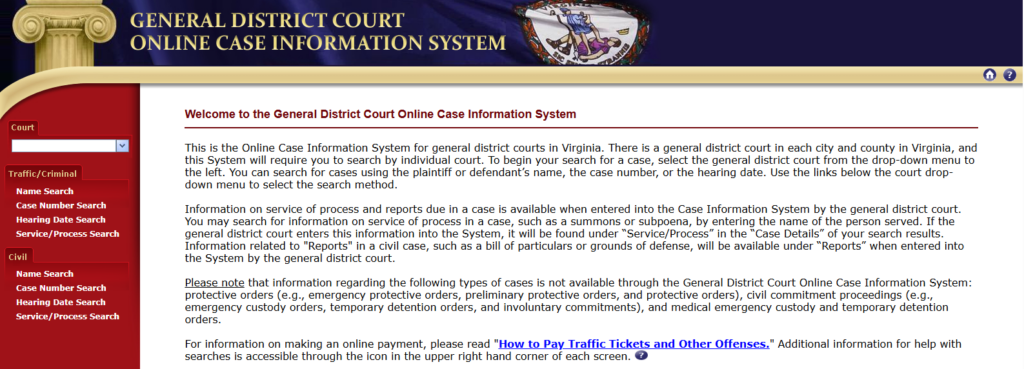
- Find and click the “Court” dropdown menu located on the left sidebar.
- Select the specific General District Court that matches the relevant city or county of the case.
- Look through the case categories shown on the left side of the page, such as:
- Traffic/Criminal
- Civil
- Click on the appropriate category based on the type of case you want to search.
- Choose a search option available on the system, such as:
- Search by Name
- Search by Case Number
- Search by Hearing Date
- Search by Service or Process Details
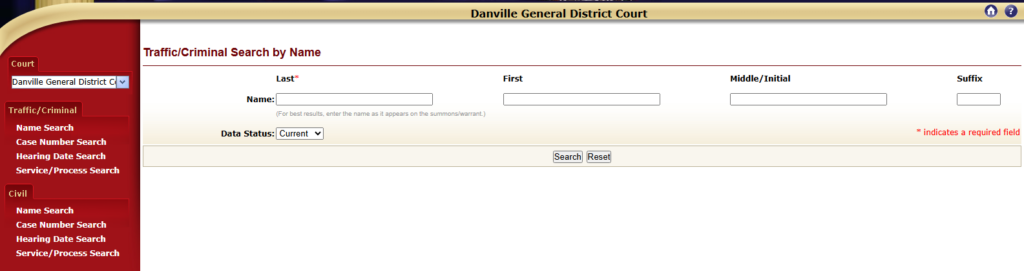
- Enter the required information into the selected search form carefully.
- Click submit to run the search and retrieve available case records.
- Review the results, which may include case status, hearing schedules, charges, and other related court information.
Searching by Name or Case Number
Most online criminal records Chesapeake searches begin with either a full name or a case number. Name-based searches are common for public users who do not have case identifiers.
Search tools often provide flexible fields such as:
- Full legal name
- Partial name matching
- Case identification number
- Filing date range
- Court division selection
Case number searches deliver more precise results since each record carries a unique identifier. Name searches may return multiple entries, especially for common surnames.
A case search system may also show:
| Search Type | Result Accuracy | Typical Use |
|---|---|---|
| Case Number | High precision | Known case reference |
| Full Name | Medium precision | General lookup |
| Partial Name | Lower precision | Broad screening |
These tools support structured filtering but still rely on correct input details.
Clerk of Court Search Options
The Chesapeake Clerk of Court maintains official criminal case filings and related documents. These records are stored in physical archives and digital case management systems.
Clerk-managed criminal database records often include:
- Arrest-related filings
- Court orders and judgments
- Sentencing details
- Hearing schedules
- Disposition notes
Requests for case details are processed through clerk-managed search tools that follow court record policies. Some records may appear in summary form online, while full files remain stored in court archives.
Types of Criminal Records Available in Chesapeake
Chesapeake criminal records include felony records, misdemeanor history, arrest records, and conviction records. These records reflect offense classifications, case outcomes, sentencing records, and court dispositions handled through local courts. They also show how a case moved from arrest to final result. Each record type builds a clear criminal history timeline for review.
Felony Records
Felony records cover serious offenses such as violent crimes, major theft, and high-level drug cases. These cases fall under higher offense classifications and carry strict penalties. Felony records often include long-term sentencing records, probation details, and incarceration terms. They also show court charges filed and final court dispositions.
Details in felony records:
- Type of felony offense
- Criminal charges filed
- Case outcome in court
- Sentencing details and penalties
Felony entries remain a major part of felony records and shape long-term conviction records.
Misdemeanor History
Misdemeanor history includes lower-level offenses such as minor theft, traffic-related crimes, and disorderly conduct. These cases carry lighter penalties than felony charges. Records show arrest records, charges, and final court results. They also reflect short-term penalties like fines or community service.
Elements in misdemeanor history:
- Misdemeanor offense type
- Arrest and booking information
- Court dispositions
- Penalty outcomes
Misdemeanor history still forms part of a full criminal history timeline.
Court Convictions
Court convictions reflect cases where a judge or jury found guilt. These conviction records confirm outcomes after hearings or trials. They show criminal charges, verdicts, and resulting penalties. Conviction records often connect directly with sentencing records.
Court conviction details include:
- Guilty findings or plea outcomes
- Final court dispositions
- Associated felony or misdemeanor classification
- Long-term record status
Conviction records stay central in background record checks.
Sentencing Records
Sentencing records focus on penalties assigned after conviction. These records show jail terms, fines, probation periods, and rehabilitation orders. They also connect to offense classification and court decisions. Sentencing records provide a clear view of punishment levels across cases.
Sentencing elements:
- Jail or prison terms
- Probation conditions
- Court-ordered fines
- Alternative penalties
Sentencing details often complete the criminal history timeline.
Arrest and Booking Information
Arrest records and booking details show the first stage of a criminal case. These records include detention details, charges, and initial processing data. They may not always show outcomes, but still form part of the full record set. Arrest records link to later conviction records or dismissals.
Included information:
- Arrest date and location
- Criminal charges at booking
- Initial detention details
- Case entry into the court system
These records help track how a case moves through each stage of the criminal history timeline.
Information Included in Chesapeake Criminal Records
Chesapeake criminal records contain detailed case-related information about a person’s interactions with the criminal justice system. These records show arrest data, charges, court activity, and outcomes such as sentencing or dismissal. They help present a full picture of conviction records and court convictions linked to a case. These records combine multiple legal documents, including criminal filings, hearing notes, and sentencing details. They also show custody status and supervision terms after a case is resolved.
Defendant Information and Arrest Details in Chesapeake Criminal Records
Each record starts with core defendant information. This includes full name, known aliases, date of birth, and physical descriptors. In many cases, mugshots are also part of the file and linked to the arrest event.
Arrest details form a key part of the record. These details often show:
- Date and time of arrest
- Arresting agency name
- Location of incident
- Initial booking information
- Listed charges at the time of arrest
Court hearings linked to the arrest are also recorded. These entries show hearing dates, case numbers, and involved court departments. Criminal filings submitted during early case stages appear here as well, including complaints and affidavits.
Charges, Court Convictions, and Sentencing Outcomes
Charges listed in Chesapeake criminal records describe the alleged offense or offenses. These may range from misdemeanors to felonies, depending on the case type and severity. Once a case moves through the court system, conviction records reflect the final result. This section often includes court convictions, dismissals, or plea agreements.
Sentencing outcomes form a major part of the record and may include:
- Jail or prison terms
- Fines and court fees
- Community service requirements
- Probation terms with supervision rules
- Parole conditions after release
Disposition status shows the final case result. It may appear as “guilty,” “not guilty,” “dismissed,” or “pending.” This status confirms how the court resolved the matter after hearings and evidence review.
Chesapeake Felony vs Misdemeanor Records
Chesapeake criminal records separate cases based on how serious the criminal offense is. Felony records reflect high-level crimes with strict legal penalties, while misdemeanor history covers lower-level violations with lighter sentencing outcomes. Felony and misdemeanor classifications shape how courts handle a case, what punishment applies, and how long the record may affect background checks. These criminal offense categories help define the level of risk and legal response tied to each charge.
Felony records usually involve violent crimes or serious property offenses. Misdemeanor history often includes lower-level acts such as minor theft or traffic-related violations.
Felony Offenses
Felony offenses represent the most serious criminal charges in Chesapeake criminal records. These cases involve severe harm or high-value loss. Felony cases move through higher courts and involve strict procedures. Sentences may include long-term imprisonment and heavy fines.
Examples include:
- Violent crimes such as assault with serious injury
- Major theft crimes involving large property values
- Drug distribution charges
- Repeat serious offenses
Legal penalties for felonies often exceed one year of incarceration. In some situations, lifetime consequences follow, including loss of certain rights and employment barriers.
Misdemeanor Offenses
Misdemeanor offenses are less severe but still appear in Chesapeake criminal records. These charges usually involve limited harm or lower financial loss. Courts process misdemeanor cases in district courts with faster hearings and simplified procedures. Penalties stay lighter compared to felony cases.
Examples include:
- Minor theft incidents
- Simple assault without major injury
- DUI offenses (first-time or low-impact cases)
- Disorderly conduct
Legal penalties may include short jail time, probation, community service, or fines. A misdemeanor history can still affect employment screening, though the impact is generally lower than that of felony records.
Virginia Laws on Criminal Record Access
Virginia allows portions of criminal history information to be viewed by the public under set legal conditions. Public criminal records in Virginia are available through courts and official record systems, but some records remain restricted by law. The rules balance transparency with privacy protections under state law.
Public Criminal Records Rules in Virginia
Most Virginia criminal records from adult court cases fall under public record laws. These records may include charges, court outcomes, and sentencing details from district and circuit courts. Public criminal records support background checks and legal research, but they do not show every detail of a person’s history.
Records commonly available include:
- Misdemeanor and felony case filings
- Court hearing results and judgments
- Sentencing outcomes
- Basic case status information
Some data is limited depending on the court type and case outcome. Online court systems may also vary in the level of detail shown for each case.
Restricted Records and Legal Limits on Public Criminal Records
Certain records in Virginia stay protected due to privacy laws and state restrictions. These limits affect what appears in public searches for criminal history.
Restricted categories include:
- Juvenile records
- Sealed records ordered by the court
- Expunged records removed after legal approval
- Sensitive personal data under privacy protections
Expungement allows eligible individuals to remove qualifying charges from public view. Once sealed or expunged, the record no longer appears in most public criminal records searches. Courts apply strict legal standards before approving such requests.
| Record Type | Public Visibility | Legal Control |
|---|---|---|
| Adult convictions | Public | Limited |
| Juvenile cases | Restricted | High |
| Expunged records | Not visible | Court order |
Virginia law continues to balance public record transparency with privacy rights. Legal limitations define what can be shared and what remains confidential under state rules.
(FAQs) About Chesapeake Criminal Records
Chesapeake criminal records are part of Virginia public court data and show details of criminal cases handled in local courts. These records usually include charges, hearings, and final case outcomes. Most adult cases stay visible in court systems unless a court order restricts them.
Are Chesapeake criminal records public?
Chesapeake criminal records are mostly part of Virginia public court data and can be viewed by the public. These records often include case details such as charges, court dates, and final judgments. However, some records remain restricted if they are sealed or legally protected. Public court data allows people to review criminal case histories for informational purposes. Still, access depends on the type of case and court decision. Juvenile and sealed matters do not appear in regular record searches.
How do I search Virginia criminal cases?
Virginia criminal cases can be searched through official court record systems by selecting the court type and entering a name or case number. The system then shows available case details such as hearings and outcomes. District and circuit courts may show different levels of information. Search results usually include case status, filing dates, and charges. Some systems also display updates on ongoing cases. Users often rely on public court data tools for quick case reference.
What is included in conviction records?
Conviction records include details of cases where a court has made a final decision. These records show the offense type, sentencing outcome, and legal penalties. They are part of a person’s criminal case history in court databases. Common details include fines, probation terms, jail time, and court rulings. These records only reflect proven cases, not pending charges. Conviction records are widely used in legal record searches and background checks.
Can criminal records be sealed?
Some criminal records in Virginia can be sealed if they meet legal conditions set by the court. Sealing limits public visibility and removes the record from standard court searches. This process usually applies to eligible dismissed or qualified cases. Once sealed, the record does not appear in public criminal case access systems. Only authorized agencies may view it under specific conditions. Approval depends on court review and eligibility rules.
Are juvenile records public?
Juvenile records in Chesapeake are generally not part of public court data. These records are kept confidential to protect minors involved in legal cases. Most juvenile matters do not appear in online criminal record systems. Only rare exceptions apply, such as cases moved to adult court. In most situations, juvenile criminal case information remains private. This limits public visibility for youth-related legal matters.